Navigating the complexities of human relationships often feels like solving a puzzle, especially when destructive patterns emerge. One of the most effective ways to analyze these intense interactions is through the drama triangle, a psychological model that explains how conflict arises and persists. By understanding the roles of the victim, rescuer, and persecutor, you can improve your interpersonal communication skills and foster more constructive relationships.
Lesson plan: Breaking the cycle of the Karpman drama triangle
Level: Intermediate
Time: 45 minutes
Topic: Psychology and interpersonal communication
Objectives: Identify the three roles of the drama triangle, understand how roles shift, and learn strategies to escape unhealthy dynamics.
Video: Karpman Drama Triangle
Background
The drama triangle is a social model of human interaction first conceived by Stephen Karpman in 1968. It illustrates a power dynamic involving three roles: one “one-down” role (the victim) and two “one-up” roles (the rescuer and the persecutor). This model is widely used in psychology to help individuals identify toxic relationship patterns and move toward personal empowerment.
According to the model, these roles are not static; participants often shift between them during a single interaction. For example, a rescuer might become a persecutor if their help is rejected, eventually feeling like a victim. Recognizing your “starting gate”—the role you most naturally enter—is the first step toward resolving these draining interactions and achieving healthier social connections.
Basic vocabulary
Introduce essential words related to conflict and the drama triangle.
Vocabulary list
- Conflict (noun): A serious disagreement or argument.
- Verb: Conflict; Adjective: Conflicting.
- Example: The constant conflict between the siblings was a result of the drama triangle.
- Interaction (noun): Reciprocal action or influence.
- Verb: Interact; Adjective: Interactive.
- Example: Their daily interaction often turned into a power struggle.
- Empowerment (noun): The process of becoming stronger and more confident.
- Verb: Empower; Adjective: Empowered.
- Example: Moving from a victim to a survivor leads to personal empowerment.
- Powerless (adjective): Without ability, influence, or power.
- Noun: Powerlessness; Adverb: Powerlessly.
- Example: He felt powerless to change the situation at work.
- Boundary (noun): A limit or line that should not be crossed.
- Verb: Bound; Adjective: Bounded.
- Example: Setting a clear boundary is essential for healthy relationships.
- Destructive (adjective): Causing great and irreparable harm or damage.
- Noun: Destruction; Verb: Destroy; Adverb: Destructively.
- Example: The persecutor’s behavior had a destructive effect on the team.
- Identity (noun): The fact of being who or what a person or thing is.
- Verb: Identify; Adjective: Identifiable.
- Example: Her identity was closely tied to her role as a rescuer.
- Resolution (noun): The action of solving a problem or dispute.
- Verb: Resolve; Adjective: Resolute.
- Example: They sought a peaceful resolution to the family argument.
- Draining (adjective): Depleting someone of strength or resources.
- Verb: Drain; Noun: Drain.
- Example: Dealing with a bully can be emotionally draining.
- Consequence (noun): A result or effect of an action or condition.
- Adjective: Consequent; Adverb: Consequently.
- Example: You must address the consequences of your actions.
Vocabulary for extension
- Self-explanatory (adjective): Easily understood; not needing explanation.
- Self-righteous (adjective): Characterized by a certainty that one is totally correct.
- Survivor (noun): A person who copes well with difficulties in their life.
- Challenger (noun): One who invites someone to engage in a contest or take responsibility.
- Strategy (noun): A plan of action designed to achieve a long-term aim.
- Inevitable (adjective): Certain to happen; unavoidable.
- Dynamic (noun): A force that stimulates change or progress within a system.
- Toxic (adjective): Very harmful or unpleasant in a pervasive or insidious way.
- Grateful (adjective): Feeling or showing an appreciation of kindness.
- Reflect (verb): To think deeply or carefully about something.
Teaching tips
- Use role-playing exercises to help students feel the difference between “one-up” and “one-down” positions.
- Create a “word map” where students connect the vocabulary words to the specific roles in the triangle.
Grammar spotlight: The language of conflict and boundaries
To describe the drama triangle, we frequently use the present simple tense for general truths and roles (e.g., “The victim feels powerless”). We also use conditional sentences to discuss consequences and boundaries. For example: “If you keep your side of the agreement, I can keep mine.” This structure is vital for practicing how to set boundaries and communicate expectations clearly.
Present simple for roles and universal truths
We use the present simple to describe the consistent behaviors and feelings associated with each role in the Karpman model. Because these roles represent “typical” patterns of interaction, the present tense helps define their nature.
- The victim often feels powerless and thinks that life is unfair.
- The rescuer takes responsibility for others but neglects their own needs.
- The persecutor acts in a self-righteous manner and blames those around them.
Grammar tip: When discussing these roles as general concepts, remember to add the “s” to the verb for third-person singular subjects (he/she/it/the rescuer).
First conditional for boundaries and consequences
To move out of the triangle, you must communicate clearly. The first conditional is the primary tool for setting boundaries because it links a specific action to a future result. It follows the structure: If + present simple, will/can + base verb.
- Setting a boundary: “If you keep your side of the agreement, I can keep mine.”
- Addressing consequences: “If this behavior continues, I will leave the conversation.”
- Offering healthy support: “If you want to solve this, I will support your plan, but I won’t do the work for you.”
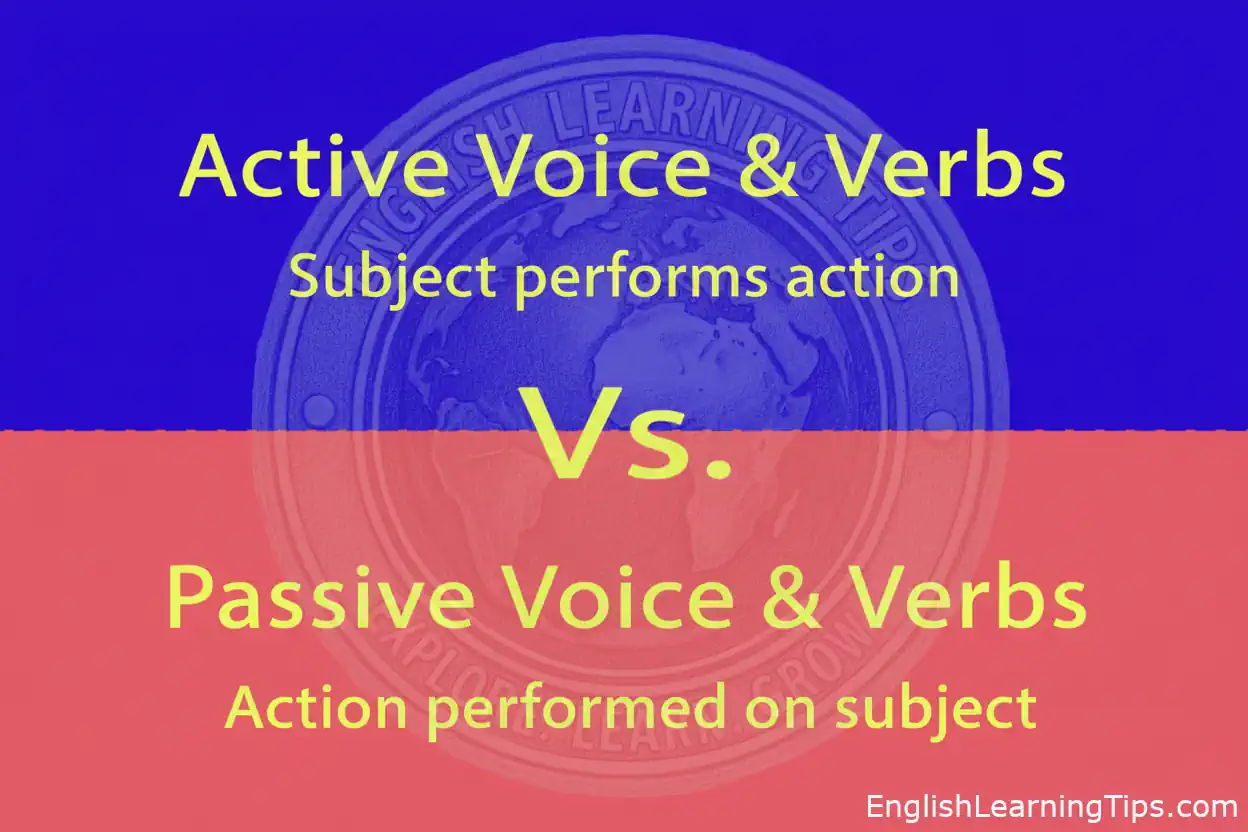
Shifting from passive to active voice
Participants in the drama triangle often use the passive voice to avoid responsibility (e.g., “The ball was dropped” or “I was made to feel this way”). To escape the triangle and enter a “survivor” or “coach” mindset, we shift to the active voice.
- Triangle (passive): “Mistakes were made by the team.”
- Empowered (active): “I made a mistake, and I will fix it.”
- Triangle (passive): “I am being drained by this situation.”
- Empowered (active): “I am choosing to set a boundary to protect my energy.”
Practical exercise: Sentence transformation
Try transforming these “triangle” statements into “empowered” statements using the grammar rules above:
- Victim statement: “Nothing ever goes my way.” (Change to active voice with a specific action).
- Rescuer statement: “They need my help or they will fail.” (Change to a first conditional boundary).
- Persecutor statement: “It is all your fault.” (Change to a first conditional regarding an agreement).
You could ask: How do you think changing your grammar might change the way you feel during a difficult conversation?
Useful phrases
Key phrases
- “I feel powerless in this situation.”
- “What steps can I take to get what I want?”
- “I am happy to support you, but I can only listen for ten minutes.”
- “What do you think you can do to change this?”
- “If you keep your side of the agreement, I can keep mine.”
Teaching tips
- Have students practice the “Survivor” questions in pairs to shift from a passive to an active mindset.
- Focus on the intonation of setting boundaries—it should be firm but not aggressive.
Example conversations
Conversation 1: Basic description
Teacher: Can you explain the drama triangle to me?
Student: It is a model by Stephen Karpman that shows how conflict happens between people.
Teacher: That is correct. What are the three roles?
Student: The roles are the victim, the rescuer, and the persecutor.
Conversation 2: Adding details
Person A: I noticed that I often jump into the rescuer role when my friend is sad.
Person B: That is interesting. Do you feel like it is your responsibility to fix their problems?
Person A: Yes, but it becomes very draining because I ignore my own life.
Person B: You should try acting more like a coach than a rescuer to stay out of the triangle.
Conversation 3: More advanced
Manager: If you don’t finish this report by Friday, there will be consequences.
Employee: I understand the deadline, but I feel you are being a bit of a persecutor right now.
Manager: I want to be a challenger instead. What do you need from me to meet the goal?
Employee: I need you to set a clear boundary on how many other tasks I am assigned this week.
Teaching tips
- Encourage students to identify which role the speakers are currently occupying in the dialogues.
- Ask students to rewrite Conversation 1 using more complex vocabulary.
Teaching strategy
The best approach for this lesson is the Case Study Method. Provide students with a short story of a workplace or family conflict and ask them to map the characters onto the drama triangle. This allows them to apply the theory to realistic scenarios before analyzing their own lives.
Here’s a 45-minute lesson plan
Step 1: Warm-up (5 minutes)
Ask students to think of a time they felt “drained” after a conversation and share one word to describe that feeling.
Step 2: Vocabulary introduction (10 minutes)
Present the vocabulary list and have students match the words to the three roles (victim, rescuer, persecutor).
Step 3: Phrase practice (10 minutes)
Introduce the “Key phrases” and have students practice saying them with different emotions: frustrated, firm, and helpful.
Step 4: Conversation practice (15 minutes)
Students work in groups of three to role-play a scenario where they shift between the roles in the triangle, then try to “escape” using the survivor or coach strategies.
Step 5: Wrap-up and personalization (5 minutes)
Each student writes down one “starting gate” role they recognize in themselves and one step they can take to change it.
Discussion questions
- Question: Why is it common for a rescuer to have a “messy” life?
- Answer: Because they focus on other people’s problems to avoid dealing with their own.
- Question: How does a victim become a survivor?
- Answer: By becoming a problem solver and asking what actions they can take.
- Question: What is the “Golden Rule” mentioned for rescuers?
- Answer: “Teach a man to fish,” meaning you should support people in solving their own problems.
- Question: Why do roles shift within the triangle?
- Answer: Because the dynamics are based on power struggles; once the balance changes, the roles shift.
- Question: What is a “starting gate”?
- Answer: It is the role that a person most naturally or frequently enters when a conflict begins.
Additional tips
- Cultural sensitivity: Recognize that in some cultures, the “rescuer” role is seen as a duty to the family, so discuss the difference between healthy support and unhealthy rescuing.
- Visual aids: Use a physical triangle on the floor for students to stand in during role-plays to visualize the shifts.
- Adapt for level: For lower levels, focus on the words “Help,” “Bully,” and “Sad.” For higher levels, use terms like “Self-righteous” and “Counter-productive.”
- Technology: Use a digital poll to let students anonymously vote on which role they think is the most common in modern movies.
Common mistakes to address
- Grammar: Mixing up “bored” and “boring” when describing the effects of the triangle on an individual.
- Word choice: Using the word “Victimizer” instead of “Persecutor,” which, while similar, doesn’t capture the specific nuance of the Karpman model.
Example activity
The triangle escape: Give students a script of a “Victim” complaining about their job. Have the other students write two different responses: one as a “Rescuer” (unhealthy) and one as a “Coach” (healthy).
Homework or follow-up
- Writing: Write a 200-word reflection on a movie character who fits one of the roles.
- Speaking: Record a 1-minute audio clip explaining the difference between a rescuer and a teacher.
- Research: Find a forum online where people discuss relationship advice and identify one instance of the drama triangle in the comments.
FAQs
- Can you be in the triangle alone? No, the drama triangle requires at least two people, though one person can play multiple roles in their own mind during a conflict.
- Is being a rescuer always bad? Helping people is good, but “rescuing” becomes unhealthy when you take away the other person’s power to solve their own problems.
- How long does it take to break these habits? It takes consistent reflection and the practice of setting boundaries, as these roles are often part of our identity.
- What if the other person won’t leave the triangle? You can only control your own role. By becoming a survivor, coach, or challenger, you change the dynamic, which often forces the triangle to collapse.
Conclusion: Take control of your interactions
Breaking free from the drama triangle is a powerful way to reclaim your energy and build more authentic connections. By identifying your starting gate and practicing new communication strategies, you can transform destructive patterns into opportunities for growth. Do you recognize yourself in any of these roles? Share your thoughts in the comments below, and let’s discuss how to move toward empowerment together! If you found this guide helpful, please share it with your network to help others improve their relationships.
Disclaimer and resources
Important note: This article is for educational purposes only and does not constitute medical advice, diagnosis, or professional mental health treatment. If you are struggling with toxic relationships, emotional distress, or mental health concerns, please consult a licensed therapist or medical professional.
If you or someone you know needs immediate support, consider these resources:
- Crisis Text Line: Text “HOME” to 741741.
- National Suicide Prevention Lifeline: Call or text 988 (USA).
- Psychology Today: Use their “Find a Therapist” directory to locate licensed professionals in your area.
- International Resources: Visit befrienders.org or https://www.iasp.info/suicidalthoughts/
Discover more from English Learning Tips
Subscribe to get the latest posts sent to your email.