
Common Christmas vocabulary and greetings

Learning Christmas phrases is a fun way for English learners to practice greetings, expressions, and seasonal vocabulary. These are simple, commonly used in conversations, cards, songs, and movies. Start with basic greetings, then try more expressive ones!
Common Christmas holiday phrases for ESL students
A note on capitalization: All proper nouns are always capitalized, but sometimes people may capitalize the complete phrase on a Christmas card or advertisement. For example, “Happy Holidays” or “Happy holidays!”, it depends on your preference.

Basic greetings
These are the most common ways to wish someone well during the holidays:
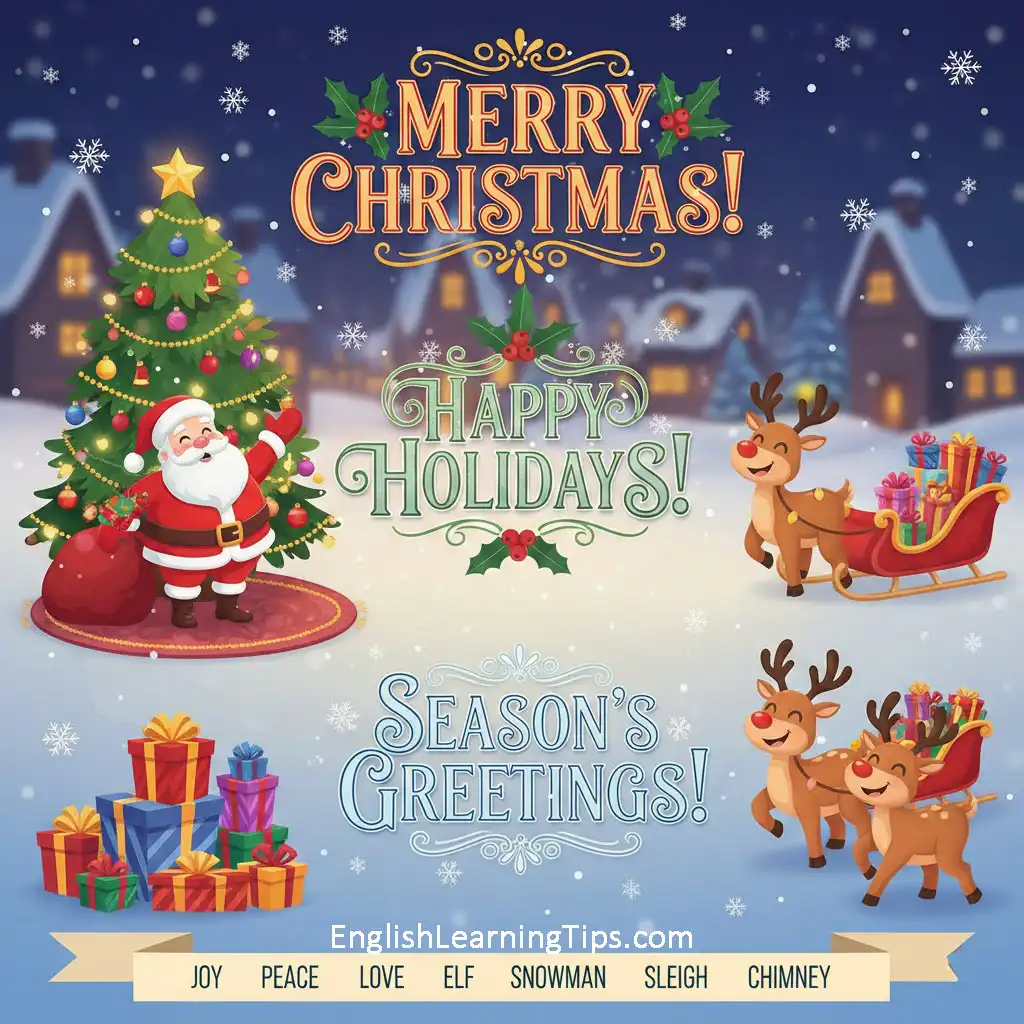
- Merry Christmas!
The classic greeting is used on December 25. - Happy Holidays!
Inclusive greeting for Christmas, New Year, or other winter celebrations. - Season’s Greetings!
Formal and neutral, often in cards or emails. - Happy New Year!
For the end of December or January 1. - Merry Christmas and a Happy New Year!
A longer, warm wish combining both.
Fun and expressive phrases
These add holiday cheer and are great for practice:
- Ho Ho Ho!
What Santa Claus says – joyful laughter! - Joy to the World!
From a famous Christmas song, meaning happiness everywhere. - Peace on Earth
A wish for kindness and no fighting. - ‘Tis the season to be jolly!
Means “This is the time to be happy!” - Deck the halls
To decorate the house with holiday items (from the song “Deck the Halls”).
Other useful expressions
- Wishing you joy and peace
A kind, heartfelt message. - Spread good cheer
Share happiness with others. - In the holiday spirit
Feeling excited and festive. - We wish you a Merry Christmas
From the popular carol song.
Practice these by saying them to friends, writing cards, or singing songs. They’re simple but help you sound natural in English during the holidays!
Christmas vocabulary by level
Christmas is a wonderful topic for practicing English! Here, you’ll find vocabulary words and phrases organized by level: Beginner (basic words, easy to learn with pictures), Intermediate (more details and traditions), and Advanced (idioms, expressions, and nuanced terms). Use these to talk about decorations, traditions, food, and celebrations.
Beginner
These are simple, common words often taught with visuals.
- Christmas tree – A decorated tree for the holiday. 🎄
- Santa Claus (or Father Christmas) – The jolly man who brings gifts. 🎅
- Gift / present – Something you give or receive. 🎁
- Stocking – A big sock hung for gifts. 🧦
- Reindeer – Animals that pull Santa’s sleigh (e.g., Rudolph). 🦌
- Snowman – A figure made of snow. ☃️
- Star – Often on top of the tree. ⭐
- Bell – Makes a ringing sound, like jingle bells. 🔔
- Candy cane – Striped sweet candy.
Other beginners: ornament, wreath, Christmas lights, elf, sleigh
Intermediate
Build sentences with these words about traditions and scenes.
- Nativity scene – The story of Jesus’s birth with figures.
- Mistletoe – Plant hung for kissing underneath.
- Carol – A Christmas song; carolers – People who sing door-to-door.
- Advent calendar – Counts down to Christmas with small doors.
- Eggnog – A creamy holiday drink.
- Gingerbread – Cookies or houses made of spiced dough.
- Tinsel – Shiny strands for decorating.
- Holly – Red berries and green leaves for decoration.
- Manger – Where baby Jesus was placed.
Other intermediates: fireplace, chimney, wrapping paper, turkey (dinner), mince pie.
Advanced
- Yule / yuletide – Old word for Christmas season.
- Figgy pudding – Traditional dessert from songs.
- Goodwill – Kindness and peace (as in “goodwill to all”).
- Epiphany – January 6, end of the 12 days of Christmas.
Idioms and expressions
- In the holiday spirit – Feeling festive and happy.
- Deck the halls – Decorate for Christmas.
- Tis the season – It’s the time for joy and giving.
- Christmas came early – Something good happened sooner than expected.
- White Christmas – Snow on Christmas Day.
- The gift that keeps on giving – Something beneficial long-term.
- Like turkeys voting for Christmas – Doing something harmful to yourself.
- It’s the thought that counts – The intention behind a gift matters more than the gift itself.
Common phrases for talking about Christmas
Use these in conversations, cards, or messages.
Greetings
- Merry Christmas!
- Happy Holidays! (inclusive)
- Season’s Greetings!
- Merry Christmas and a Happy New Year!
Other expressions
- Ho ho ho! (Santa’s laugh)
- Joy to the world!
- Peace on Earth, goodwill to all.
- Spread holiday cheer.
- Get into the Christmas spirit.
- We wish you a Merry Christmas (from the song).
Practice by describing pictures, singing carols, or role-playing holiday conversations. These words and phrases will help you from simple talks to advanced discussions. Enjoy the season!
Frequently asked questions about Christmas vocabulary
Spread the holiday cheer
Learning English through holiday-themed expressions is a fun way to improve your vocabulary and cultural knowledge. Whether you are writing a heartfelt card, singing a traditional carol, or just chatting with friends, these common phrases and words will help you sound natural and festive throughout the season.
Join the conversation
What is your favorite way to say “Merry Christmas” or “Happy Holidays” in your native language? Do you have a favorite holiday tradition you love to talk about? Share your thoughts in the comments below, and if you found this guide helpful, please share it with other English learners who want to get into the holiday spirit!
Discover more from English Learning Tips
Subscribe to get the latest posts sent to your email.


