

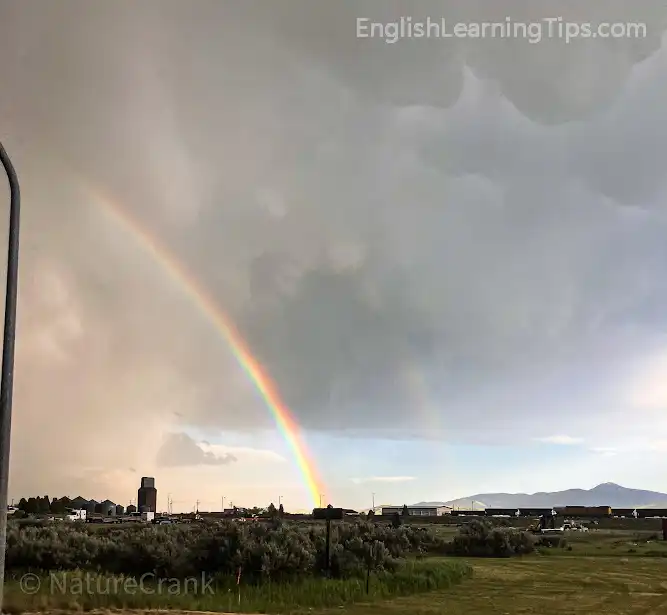
Mastering English weather vocabulary: A comprehensive guide

Whether you are checking the daily forecast or engaging in casual conversation, understanding how to talk about the climate is a foundational skill for English learners. From basic descriptions of sunny skies to advanced meteorological terminology, this guide will help you speak with confidence about the weather.
Basic weather terms: Describing daily conditions
These common adjectives are the foundation of weather communication. Use them to describe how it feels outside at a glance.
| Term | Meaning |
| Sunny | Bright with direct sunlight. |
| Cloudy | Sky covered with clouds. |
| Rainy | Wet with rain. |
| Windy | Strong air movement. |
| Foggy | Thick mist near the ground. |
| Humid | Air feels heavy, wet, or sticky. |
| Frigid | Intensely cold; often below freezing. |
Common weather conditions and phenomena
Understanding the difference between specific phenomena helps you describe the environment more accurately.
- Precipitation: Any form of water falling from the sky. This includes rain, snow, sleet (a mix of rain and snow), and hail (small balls of ice).
- Thunder and lightning: The classic pairing during a storm. Remember, lightning is the flash of light, and thunder is the sound that follows.
- Mist vs. fog: Both are clouds near the ground, but fog is significantly denser and reduces visibility more than mist.
- Rainbow: A natural, colorful arc that appears when sunlight hits water droplets.
Temperature and seasons
When discussing the climate, precision matters. Understanding seasonal shifts helps you plan activities and conversations effectively.
- Degrees: The unit used to measure temperature (Celsius or Fahrenheit).
- Freezing: When the temperature drops below 0°C (32°F).
- Seasons: Spring (mild/blooming), summer (hot), autumn/fall (cool/leaves fall), and winter (cold/snowy).
Advanced weather vocabulary and meteorology
To move beyond basic fluency, incorporate these terms to describe specific atmospheric events.
Meteorological terminology
- Overcast: The sky is completely covered with thick, gray clouds.
- Drizzle vs. downpour: Drizzle is light, fine rain; a downpour is sudden and heavy.
- Blizzard: A severe snowstorm characterized by high winds and low visibility.
- Barometric pressure: The weight of the atmosphere. A falling barometer often signals that a storm is approaching.
- Dew point: The temperature at which air becomes saturated with moisture, often leading to fog.
- Meteorological gear: If you are ready to start observing like a pro, you can track your own local data with a high-quality Ecowitt weather station, which I personally use. For precise wind measurements on the go, a handheld anemometer is an essential tool for any weather enthusiast.
Understanding cloud types: A visual guide
Clouds are categorized by their altitude—high, middle, and low—and their shape. For a deeper look at how meteorologists classify the sky, refer to the NASA guide to cloud types.
- High-level clouds (above 20,000 ft):
- Cirrus: Thin, wispy, white clouds made of ice crystals. They often indicate fair weather but can signal a change in wind direction.
- Cirrostratus: Thin, sheet-like clouds that often cover the entire sky. They can create a “halo” effect around the sun or moon.
- Mid-level clouds (6,500 to 20,000 ft):
- Altocumulus: White or gray patches or round masses. If you see these on a warm, sticky morning, it often signals thunderstorms by late afternoon.
- Altostratus: Gray or blue-gray sheets that usually cover the whole sky. They often form ahead of storms with continuous rain or snow.
- Low-level clouds (below 6,500 ft):
- Stratus: Uniform, flat, gray clouds that look like a fog that doesn’t touch the ground. These often bring light mist or drizzle.
- Cumulus: The classic “fluffy,” white, cotton-ball clouds. These generally indicate fair weather.
- Vertical development clouds:
- Cumulonimbus: Often called “the king of clouds.” These are dense, towering vertical clouds that look like an anvil at the top. They are the primary source of severe thunderstorms, heavy rain, and lightning.
Common weather phrases and idioms
- Under the weather: Feeling sick or unwell.
- Every cloud has a silver lining: Finding something positive in a difficult situation.
- Raining cats and dogs: A common way to describe a very heavy downpour.
- The calm before the storm: A quiet moment before a chaotic event.
- A storm in a teacup: When someone overreacts to a minor problem.
Want to learn more? See our guides on English idioms.
Frequently asked questions (FAQs) about weather vocabulary
Wrapping up: Your guide to talking about the weather
Mastering weather vocabulary is more than just learning new words—it is about gaining the confidence to strike up a conversation in any situation. Whether you are describing a balmy spring afternoon or preparing for a winter blizzard, these terms will help you communicate clearly and naturally.
Share your weather wisdom
Language is best learned through practice and community. Did you find a new phrase you plan to use today? Is there a weather term from your home country that doesn’t have a direct English translation? Leave a comment below and share how you describe the weather in your neck of the woods.
If this guide helped you level up your English skills, please share this article with a friend, fellow student, or study group. Together, we can make mastering English a little brighter, rain or shine!
Discover more from English Learning Tips
Subscribe to get the latest posts sent to your email.


