

How to use “used to” in English: A complete grammar guide

“I’m used to waking up at six in the morning.”
Have you ever said “I am use to” when you meant “I used to”? You’re not alone. While it looks like one simple phrase, “used to” actually wears three different hats in English. Whether you’re looking back at your childhood or trying to describe how you’re adjusting to a new city, getting the grammar right is the difference between sounding like a beginner and sounding like a pro.
1. Past habits and states: The “used to” structure
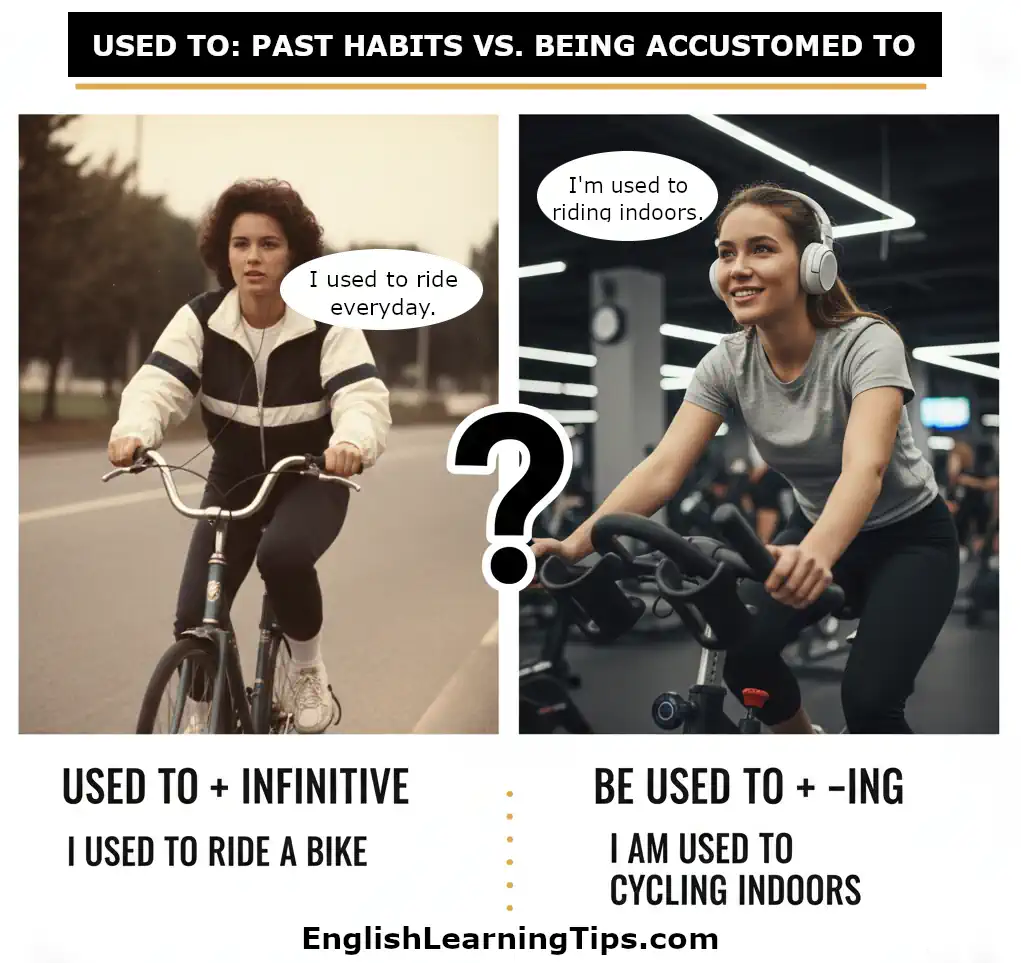
We use this form to talk about something that was true in the past but is no longer true today. It is perfect for talking about old hobbies, past living situations, or outdated preferences.
- Grammar rule: Subject + used to + infinitive verb.
- The meaning: It emphasizes the contrast between “then” and “now.”
Examples of past habits
- “I used to play soccer every weekend.” (Implies I don’t play anymore.)
- “She used to live in France.” (She lives somewhere else now.)
- “There used to be a movie theater here.” (The building is gone or has changed.)
Check out the world’s best-selling grammar book, English Grammar in Use with Answers, for more ‘used to’ exercises.
Negatives and questions (The “d” debate)
When using the auxiliary verb “did,” the “d” at the end of “used” is dropped.
- Negative: “He didn’t use to like vegetables.”
- Question: “Did you use to go to that school?”
2. Being accustomed: The “be used to” structure
This structure describes a state of familiarity. If you are “used to” something, it is no longer strange, difficult, or surprising to you.
- Grammar rule: Subject + be (am/is/are) + used to + noun/pronoun/v-ing.
- The meaning: You are already accustomed to a situation.
Examples of being accustomed
- “I am used to the cold weather.” (The cold doesn’t bother me.)
- “She is used to waking up early.” (It is a normal routine for her.)
- “Don’t worry about the noise; they are used to it.”
3. The process of adjusting: The “get used to” structure
While “be used to” describes a finished state, “get used to” describes the process of becoming familiar with something new.
- Grammar rule: Subject + get + used to + noun/pronoun/v-ing.
- The meaning: You are in the middle of a transition.
Examples of the adjustment process
- “It took me a while to get used to my new job.”
- “I am slowly getting used to driving on the left side of the road.”
- “You will eventually get used to the spicy food here.”
At a glance: Comparing the three forms
| Structure | Usage | Grammar follow-up | Example |
| Used to | Past habits (finished) | Infinitive (play, go) | I used to smoke. |
| Be used to | Currently accustomed | Noun or -ing verb | I am used to smoking. |
| Get used to | Process of adjusting | Noun or -ing verb | I’m getting used to it. |
Frequently asked questions: “Used to” vs. “Be used to”
Conclusion: Mastering the nuances of “used to”
Understanding the difference between past habits and current adjustments is a major milestone in English fluency. Picking the right version of “used to” helps you tell your story without the grammar getting in the way. Use the simple version for your “then vs. now” moments, and keep “be” or “get” for when you’re talking about your comfort zone.
Whether you are reminiscing about a childhood hobby or describing the process of settling into a new routine, these structures allow you to express the timeline of your life clearly. Remember the rule of thumb: if you’re talking about a transition, reach for “get used to”; if you’re already there, use “be used to.”
Join the conversation
We want to hear from you! English grammar is often about the process of trial and error.
- What is one habit you “used to” have that you’ve since given up?
- Is there a part of the English language you are still “getting used to”?
Leave a comment below with your example sentences, and we will jump in to provide feedback or answer any lingering questions. If this guide helped clarify these tricky phrases for you, share it with a fellow learner or on your favorite study forum!
Discover more from English Learning Tips
Subscribe to get the latest posts sent to your email.


