
Allusion: What it is and how to use it in English

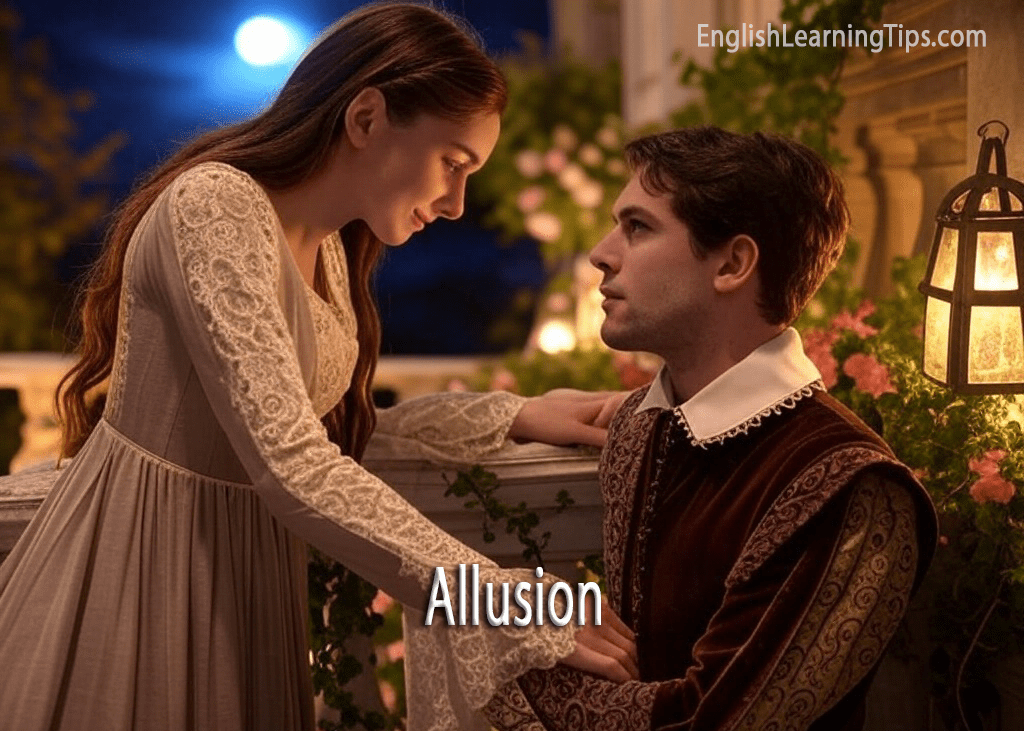
“But, soft! What light through yonder window breaks?
It is the east, and Juliet is the sun.
Arise, fair sun, and kill the envious moon,
Who is already sick and pale with grief,
That thou, her maid, art far more fair than she.” —Romeo and Juliet; Act 2, Scene 2*
In the famous balcony scene above, Shakespeare doesn’t just compliment Juliet’s beauty; he uses allusion to compare her to the sun god Apollo, suggesting she outshines the moon goddess Diana.
Mastering the allusion allows you to say more with fewer words. Here is how to spot them and, more importantly, how to use them without confusing your audience.
What is an allusion?
An allusion is a brief and indirect reference to a person, place, thing, or idea of historical, cultural, literary, or political significance. It does not describe in detail the person or thing to which it refers. It is just a passing comment, and the writer expects the reader to possess enough knowledge to spot the allusion and grasp its importance in a text.
If you want a comprehensive look at how these references work, the Oxford Dictionary of Allusions is the definitive desk reference for writers.
The core characteristics of allusion
- Indirectness: Unlike a direct citation or a detailed comparison, an allusion is subtle.
- Economy of words: It allows a writer to compress a massive idea into a single name or phrase.
- Shared cultural shorthand: It relies on a shared cultural shorthand between you and your reader.
The “knowledge contract”
For an allusion to work, there must be a “click” of recognition. If you call a difficult task a “Herculean effort,” you are banking on your reader knowing who Hercules is. If they don’t, the allusion isn’t just subtle—it’s invisible. This is why choosing the right reference for your specific audience is the most critical step in using this device.
Common types of allusion with examples
To use this device effectively, it helps to know the “buckets” most references fall into. Using these can help you establish a specific tone or emotional resonance.
| Type of allusion | Source material | Example | Meaning/Impact |
| Biblical | The Bible | “He’s a Good Samaritan.” | Implies the person is helpful and generous to strangers. |
| Mythological | Greek, Roman, or Norse myths | “Fixing that engine was a Herculean task.” | Suggests the job required immense strength or effort. |
| Literary | Classic or modern literature | “Stop being such a Scrooge!” | References Dickens to describe someone who is stingy. |
| Historical | Real-world events or figures | “He met his Waterloo at the board meeting.” | Alludes to Napoleon’s final defeat; signifies a crushing end. |
Why writers use allusion in English
Why not just say what you mean? Allusion is a powerful tool for several reasons:
- Brevity and conciseness: Instead of explaining that a character is a romantic tragic hero who is hopelessly in love, you can simply call him a “Romeo.”
- Establishing a mood: Referencing a “Pandora’s box” immediately creates a sense of impending doom or uncontrollable consequences.
- Building a connection: When a reader “gets” an allusion, it creates a bond between them and the author. It rewards the reader for their knowledge.
- Adding layers of meaning: It allows your writing to exist on two levels—the literal story and the deeper, symbolic level connected to the reference.
Still confused? Remember to watch the videos below!
How to use allusion effectively in your writing
Using allusions is an art. If you use them incorrectly, you risk confusing your audience or sounding pretentious. Here are three rules for success:
1. Know your audience
Before dropping a reference to an obscure 17th-century poem, ask yourself: Will my readers understand this? If your audience doesn’t recognize the source, the meaning is lost, and the flow of your writing is broken.
2. Ensure contextual relevance
The allusion must fit the situation. Calling a small backyard “the Garden of Eden” works for a lush, peaceful setting, but it would feel out of place when describing a modern, high-tech office.
3. Avoid “cliché” fatigue
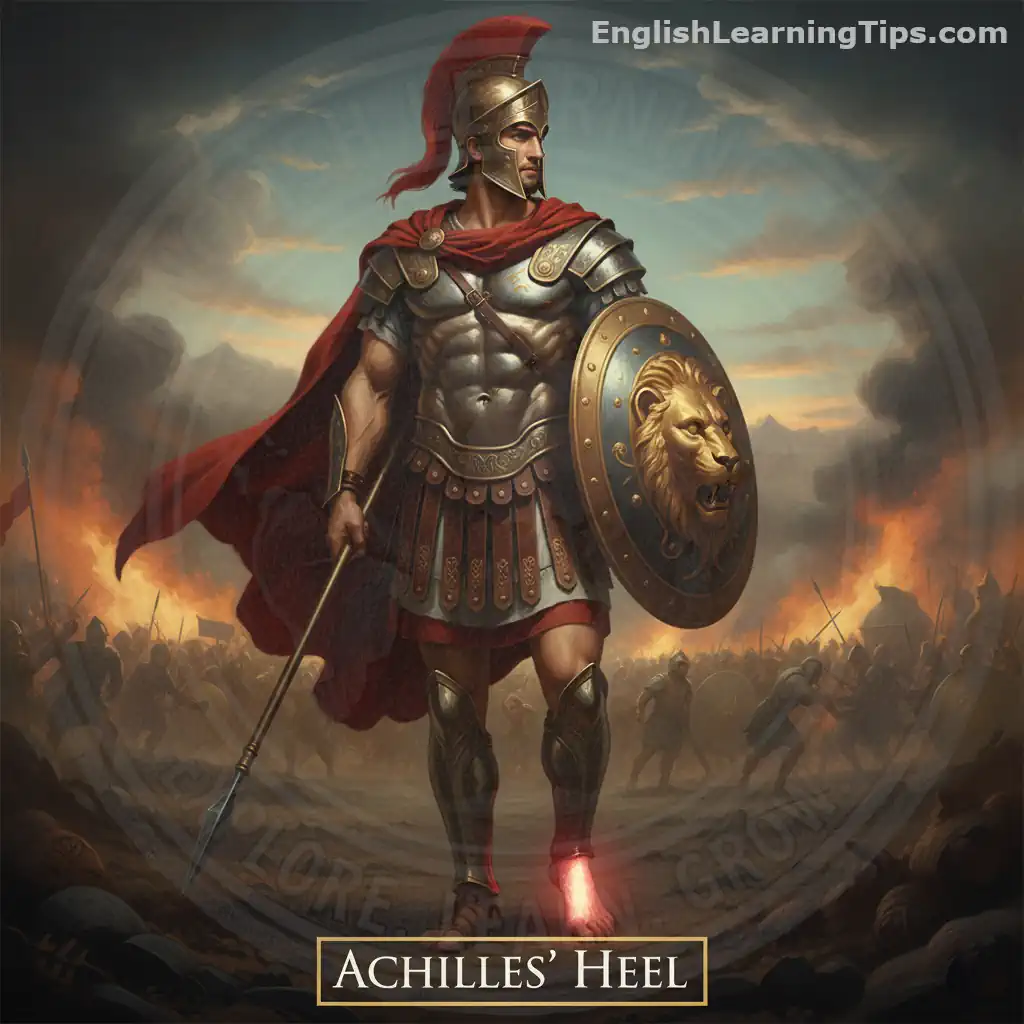
Phrases like “Achilles’ heel” or “Pandora’s box” are effective but can become “dead metaphors” if overused. Try to find fresh allusions that haven’t been exhausted by pop culture.
In my experience, the best allusions are the ones that don’t stall the reader. If a reader has to know the source to understand your basic sentence, your writing is too dependent on the reference. Aim for allusions that add “bonus” flavor for those who know the source but still make sense to those who don’t.
The challenge of allusion in ESL contexts
For English language learners, allusions are often the “final boss” of reading comprehension. Because an allusion relies on cultural shorthand rather than literal vocabulary, it can create significant barriers to understanding.
For those new to the Bard, No Fear Shakespeare’s Romeo and Juliet translates the dense allusions into modern English right on the same page.
Why allusions are difficult for English learners
- Cultural gaps: A student from a non-Western background may be highly literate but have no exposure to the Bible or Greek mythology, making “Eden” or “an Achilles’ heel” meaningless.
- The “hidden” meaning: Unlike a metaphor, which often contains a linguistic clue (like “is” or “as”), an allusion is invisible if you don’t recognize the proper noun.
- Idiomatic overlap: Many allusions have evolved into idioms (e.g., “sour grapes” from Aesop’s Fables). Students often try to translate these literally, losing the intended subtext.
Tips for teaching allusions to ESL students
- Start with pop culture: Use global icons. Referencing a “Cinderella story” in sports or a “Romeo and Juliet” romance is often easier to grasp than 18th-century poetry.
- Explicitly teach “source buckets”: Group allusions by their origin (Mythology, Shakespeare, Bible, History). This helps students categorize new references they encounter.
- Encourage “contextual detective work”: Teach students to flag capitalized words that don’t fit the immediate story. If a character in a modern office is called “Solomon,” that is a cue to look for a deeper meaning.
Frequently asked questions about allusion
Visual tools to help you learn allusion
Video: Using Disney movies to explain allusion
Video: A literary guide on allusion for students and teachers
Since so many English allusions come from mythology, having a visual guide like D’Aulaires’ Book of Greek Myths is a must-have for identifying ‘Herculean’ or ‘Achilles’ references.
Related literary devices to explore
If you want to master the English language, check out these other essential devices:
- Alliteration: Repeating initial consonant sounds.
- Idioms: Phrases where the meaning isn’t deducible from the individual words.
- Onomatopoeia: Words that mimic sounds (e.g., “sizzle” or “bang”).
- Personification: Giving human qualities to non-human objects.
- Simile: Comparing two things using “like” or “as.”
Conclusion: Master the art of allusion
Understanding allusion is like unlocking a secret code in English literature. By mastering this device, you don’t just write more concisely; you invite your readers into a shared world of history, myth, and culture. Whether you are referencing Shakespeare, the Bible, or a modern pop culture moment, an allusion adds a layer of sophistication that direct language simply cannot match.
Key takeaways for using allusion
- Keep it subtle: Allusions should feel like a “nod” to the reader, not a lecture.
- Know your audience: Ensure your readers have the cultural context to “get” the reference.
- Aim for depth: Use allusions to evoke emotions or complex themes in just a few words.
What are your favorite literary allusions?
Now that you know the difference between an Achilles’ heel and a Herculean task, we want to hear from you!
Have you spotted a clever allusion in a recent movie, song, or book that we missed? Or do you have a favorite “go-to” reference you use in your own writing?
Drop a comment below and share this article with a fellow writer or student who wants to level up their English skills. Your insights help our community grow!
Discover more from English Learning Tips
Subscribe to get the latest posts sent to your email.


