
Metaphor: What it is and how to use it in English

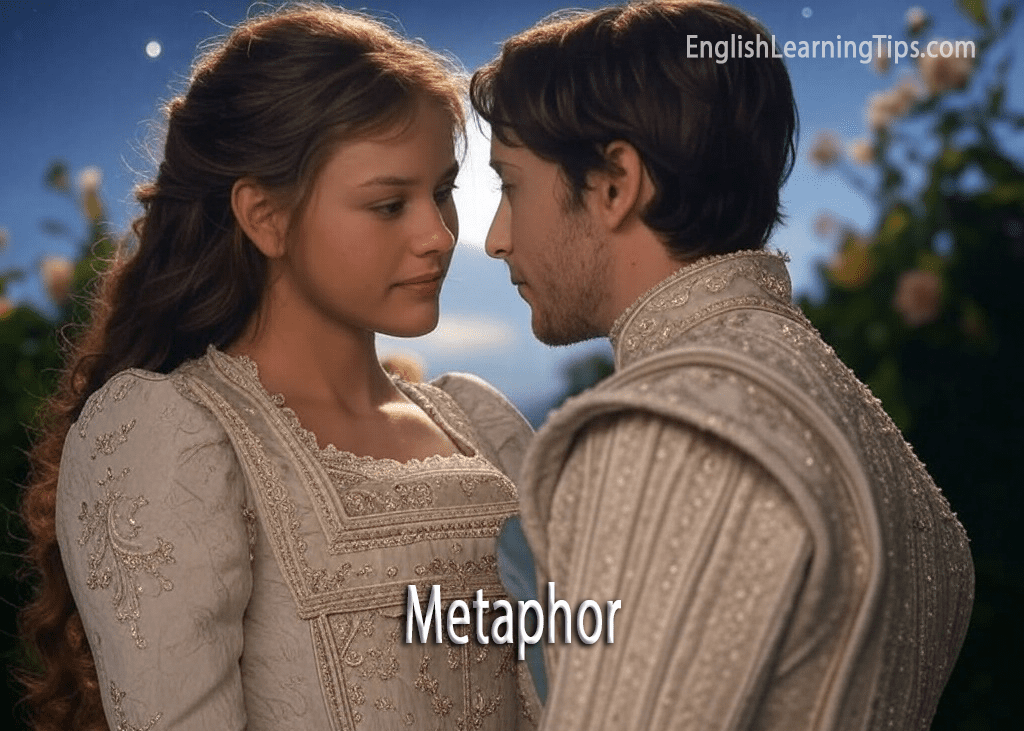
“It is the east, and Juliet is the sun.” — Romeo and Juliet; Act 2, Scene 2
A metaphor is a powerful figure of speech that describes an object or action in a way that isn’t literally true, but helps explain an idea or make a comparison. By stating that one thing is another, you bridge the gap between abstract concepts and vivid imagery.
What is a metaphor?
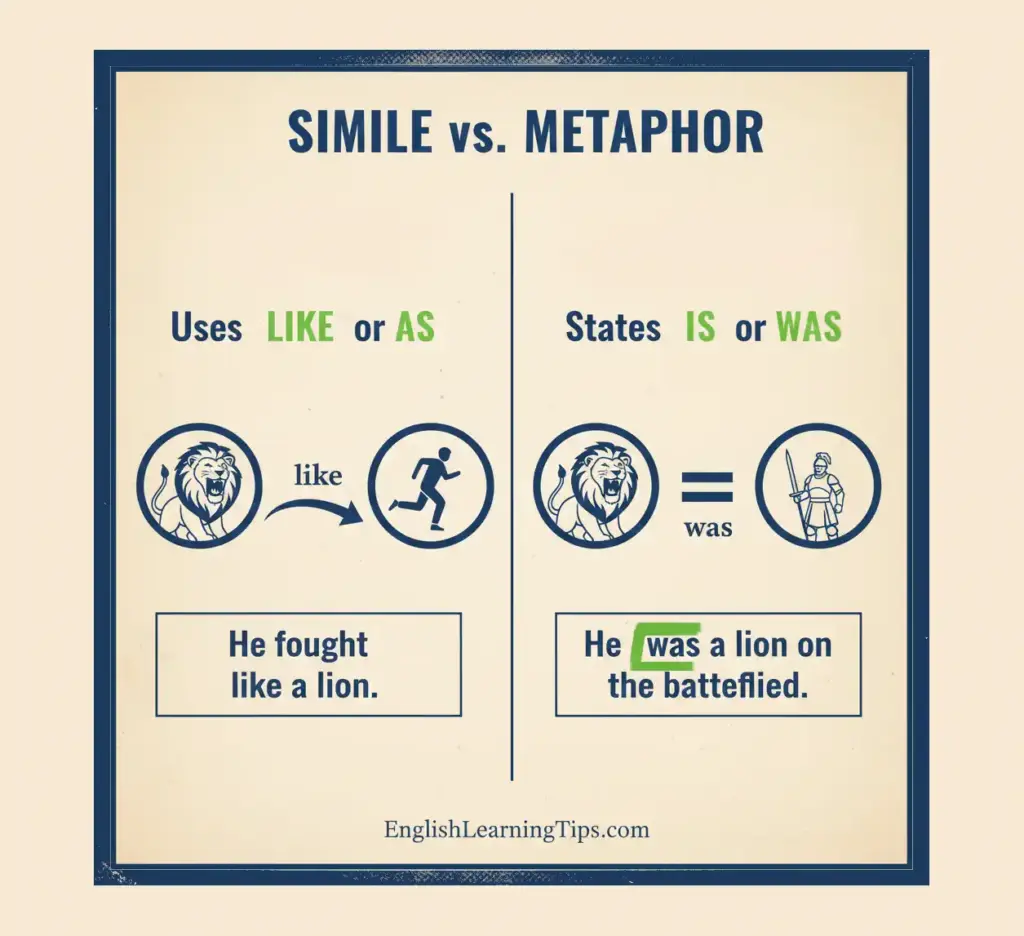
Think of a metaphor as a direct comparison between two unrelated things that share a common characteristic. Unlike a simile, which uses “like” or “as,” a metaphor makes an assertive claim: Thing A is Thing B.
Key characteristics of metaphors
- Symbolic meaning: They transfer qualities from a familiar object to a less familiar one.
- Figurative language: They are meant to be understood creatively, not literally.
- Direct identification: They create a stronger, more immediate connection than other types of figurative language.
Pro-tip: To spot a metaphor, look for the “is” or “are.” While a simile says something is similar to another thing, a metaphor claims they are identical for a moment.
Metaphor vs. simile: What is the difference?
The most common point of confusion for students and writers is the difference between a metaphor and a simile. This table breaks down the primary distinctions:
| Feature | Metaphor | Simile |
| Purpose | To create a new identity (Thing A becomes Thing B) | To make a comparison (Thing A is like Thing B) |
| Comparison Style | Direct identification (“Is”) | Indirect comparison (“Like” or “As”) |
| Grammar Clues | Uses “is,” “are,” “was,” or “were” | Uses “like,” “as,” or “resembles” |
| Strength | Strong, assertive, and transformative | Descriptive, suggestive, and illustrative |
| Example | “The classroom was a zoo.” | “The classroom was like a zoo.” |
Why you should use metaphors in your writing
Using metaphors makes your writing more memorable.
- Simplifying the abstract: Use a concrete image to explain a complex idea (e.g., “Life is a roller coaster”).
- Creating vivid imagery: Paint a picture in the reader’s mind without using long-winded descriptions.
- Evoking emotion: A well-placed metaphor can stick with a reader longer than a list of facts.
- Enhancing persuasion: By framing a topic through a specific lens, you can influence how your audience perceives it.
For a deeper dive into how metaphors shape our thought processes, I highly recommend reading Metaphors We Live By. It is a classic text that changed how writers and linguists understand figurative language.
Famous examples of metaphors in literature and life
Metaphors are everywhere—from classic poetry to daily conversation.
Common everyday metaphors
- “The city is a concrete jungle.” (Implies the city is wild, dense, and competitive.)
- “Time is a thief.” (Suggests time passes quickly and “steals” our moments.)
- “Her words were a soothing balm.” (Suggests her speech had healing properties.)
Literary metaphors
In the Romeo and Juliet quote mentioned earlier, Shakespeare equates Juliet to the sun. This implies she is the center of Romeo’s universe, the source of light in his darkness, and essential for his life. Using a metaphor here is much more impactful than simply saying “she is very pretty.”
- “The world is a stage” — William Shakespeare (Comparing life to a theatrical performance).
- “Hope is the thing with feathers” — Emily Dickinson (Comparing the abstract feeling of hope to a bird).
Visual tools to help you learn
Video: What is a metaphor?
This defines metaphor and how you can use it in film.
Video: Metaphors for kids
Common mistakes to avoid: Mixed metaphors and clichés
To maintain professional writing standards, keep these “red flags” in mind:
- Mixed metaphors: This happens when you combine two incompatible comparisons.
- Example: ‘We’ll cross that bridge when we’ve put all our eggs in one basket.’ This confuses the reader because it jumps from traveling to farming too quickly.
- Overused clichés: Phrases like “the grass is always greener” have lost their punch. Try to create original comparisons to keep your audience engaged.
- Lack of clarity: If the connection between the two objects is too obscure, your reader will be left confused rather than enlightened.
Learn more about figurative language
If you want to sharpen your writing further, explore these other essential literary devices:
- Alliteration: The repetition of consonant sounds.
- Hyperbole: Intentional exaggeration for effect.
- Personification: Giving human qualities to non-human things.
- Onomatopoeia: Words that mimic sounds.
Frequently asked questions about metaphors
Master the art of the metaphor
Metaphors do more than just decorate your sentences; they change how your audience perceives the world. Whether you are writing a professional essay or a creative story, using direct comparisons helps you express complex ideas with clarity and emotional weight. By avoiding mixed metaphors and overused clichés, you ensure your writing remains sharp and impactful.
Join the conversation
We want to hear from you! What is the most memorable metaphor you’ve ever read in a book or heard in a movie? Or, better yet, try to create your own original metaphor and share it in the comments below.
If you found this guide helpful for your English studies, please share it with a friend or a fellow writer. Your support helps us create more free resources for learners like you.
Discover more from English Learning Tips
Subscribe to get the latest posts sent to your email.


