


Fish or fishes: Which plural should you use?

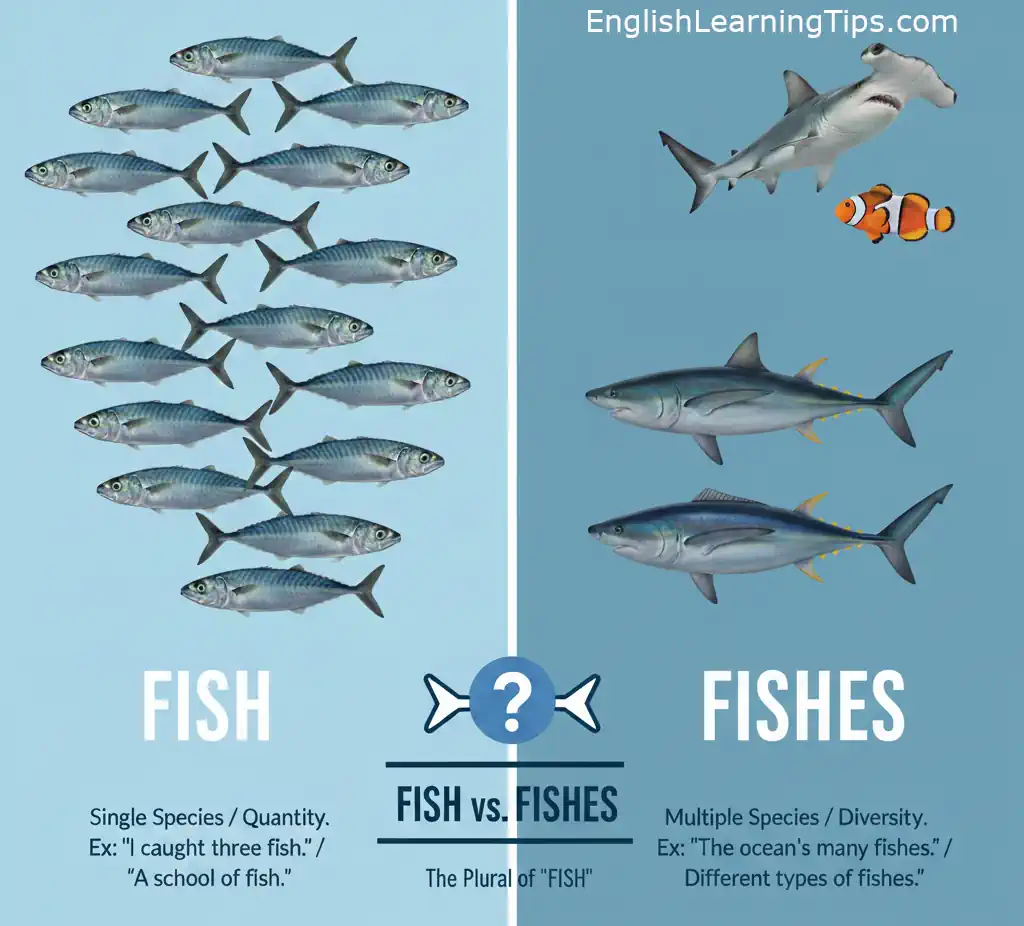
The choice between fish and fishes comes down to one thing: are you talking about a single species or a variety of them? While ‘fish’ is the safe bet for 99% of your writing, ‘fishes’ serves a specific purpose in the scientific community.
Is the plural of fish ‘fish’ or ‘fishes’?
In most everyday conversations, fish is the standard plural form. However, if you are discussing a variety of different species, fishes becomes the appropriate term.
When to use “fish” (The most common plural)
The word “fish” is what grammarians call an “invariant plural” (or a zero plural), meaning the singular and plural forms are identical. You should use “fish” in these cases:
- Multiple individuals of the same species: If you see ten tuna swimming together, you are looking at ten fish.
- A general group: When referring to a school of movement without focusing on diversity, “fish” is the standard term.
- Culinary contexts: When discussing fish as a food source or a dish, always use the singular-sounding plural.
- Example: “The menu features several fresh fish caught this morning.”
When should you use ‘fishes’ instead?
The term “fishes” is primarily used in scientific, technical, or formal writing. It is used to emphasize diversity rather than quantity.
- Multiple species: If you are referring to trout, salmon, and sea bass collectively, you are discussing the different fishes of the region.
- Scientific study: Ichthyologists (scientists who study fish) use “fishes” to categorize different taxonomic groups. Scientists currently recognize over 34,000 different species of fishes worldwide.
- Example: “The museum’s exhibit showcases the various fishes of the Great Barrier Reef.”
Quick reference guide: Grammar at a glance
| Context | Proper term | Example sentence |
| Singular | Fish | I caught one fish today. |
| Plural (Same species) | Fish | I caught three fish today. |
| Plural (Different species) | Fishes | The book covers the many fishes of the Atlantic. |
| As food / Meat | Fish | We are having grilled fish for dinner. |
Frequently asked questions about the plural of fish
Final thoughts on fish vs. fishes
Mastering the plural of fish is a hallmark of a polished writer. While “fish” will serve you well in 99% of your daily conversations, knowing when to use “fishes” shows a deep command of English grammar and scientific nuance.
Whether you are describing a single goldfish in a bowl or the diverse fishes of the Great Barrier Reef, the context of quantity versus diversity is your ultimate guide.
Join the conversation: What is your favorite fish fact?
Grammar rules like these often have strange exceptions. Did you know that while the plural of “trout” is “trout,” the plural of “shark” is almost always “sharks”?
We want to hear from you!
- Have you ever been corrected for using “fishes” in a scientific paper or a casual chat?
- Is there a specific species whose plural form always trips you up?
- Do you have a favorite idiom involving our aquatic friends?
Drop a comment below and let’s settle the “fish vs. fishes” debate once and for all. If you found this guide helpful, share it with a fellow word nerd or a fishing enthusiast who wants to get their terminology right!
Discover more from English Learning Tips
Subscribe to get the latest posts sent to your email.


