
What are possessive adjectives? A guide to showing ownership in English

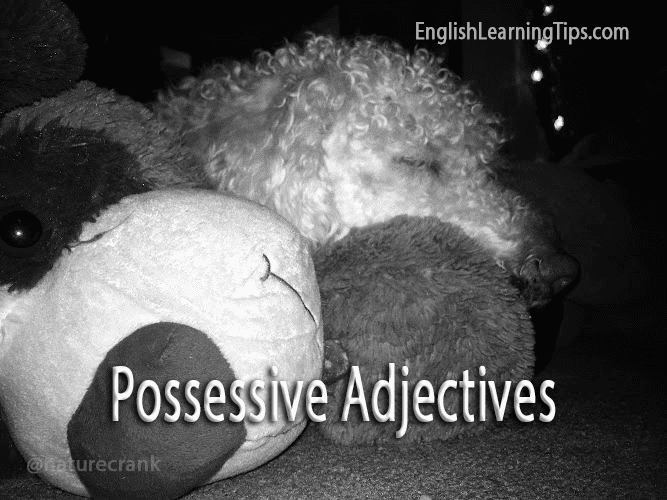
“He likes sleeping on his toy.”
In English grammar, possessive adjectives (also known as possessive determiners) are words used to modify a noun by showing who or what owns it. Simply put, they tell us who owns the noun that follows.
For example, in the sentence, “He likes sleeping on his toy,” the word his is the possessive adjective that tells us the toy belongs to him.
How possessive adjectives work
The primary function of a possessive adjective is to specify ownership. Unlike some other languages, English possessive adjectives always precede the noun they modify.
List of possessive adjectives and examples
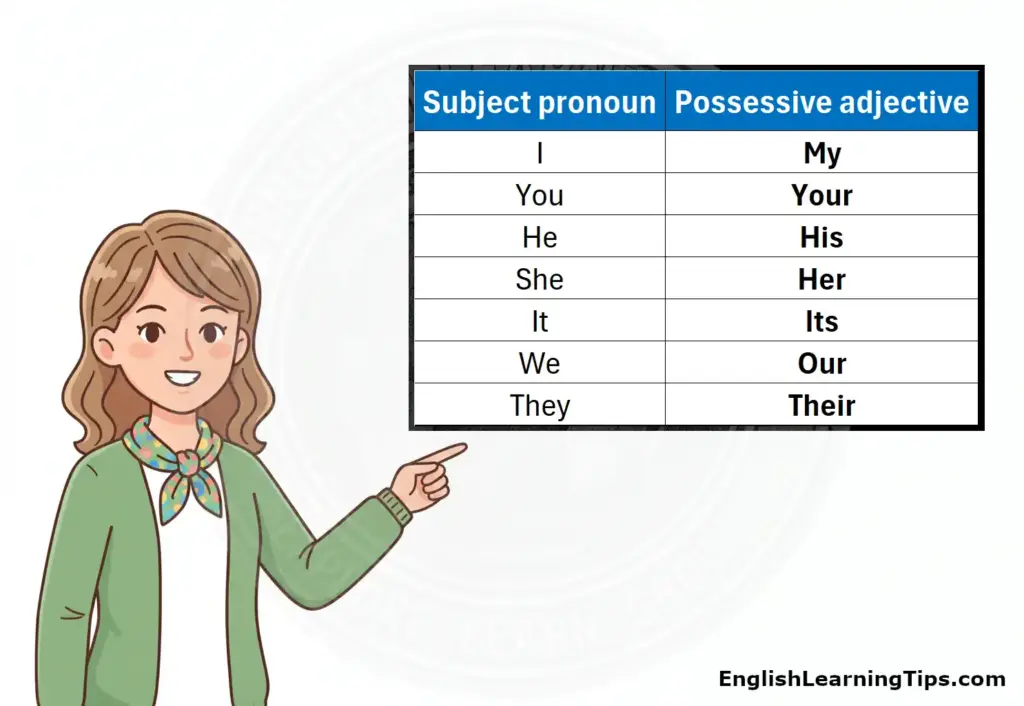
To master English sentence structure, you must know which adjective corresponds to which pronoun.
| Subject pronoun | Possessive adjective | Example sentence |
| I | My | This is my phone. |
| You | Your | Is this your bag? |
| He | His | That is his car. |
| She | Her | Her house is very big. |
| It | Its | The cat licked its paws. |
| We | Our | Our team won the championship. |
| They | Their | Their dog is always loud. |
Grammar tip: Practice makes perfect. If you’re a student or a teacher looking to master possessive adjectives, the English Grammar in Use by Raymond Murphy is the gold standard for practice exercises. It’s widely considered the best workbook for intermediate learners to move beyond the basics.
Key characteristics of possessive adjectives
To improve your writing and avoid common grammatical errors, keep these three rules in mind:
- Agreement with the possessor: The adjective must match the person who owns the object, not the object itself. For example, you would say “her books” regardless of whether there is one book or ten.
- No apostrophes allowed: One of the most common mistakes is adding apostrophes to these words. “Its” shows possession, while “it’s” is a contraction for “it is.”
- Always paired with a noun: A possessive adjective cannot stand alone. It must be followed by the noun it is describing (e.g., “my coffee”).
Note: In English, we use possessive adjectives for body parts and clothing. While some languages say “I wash the hands,” in English, we always say “I wash my hands.”
Possessive adjectives vs. possessive pronouns
It is easy to confuse these two categories, but they serve different roles in a sentence. While an adjective describes a noun, a pronoun replaces it.
- Possessive adjective: “That is my car.” (Describes “car”)
- Possessive pronoun: “That car is mine.” (Replaces “my car”)
Recommended for your desk: For writers who want to dive deeper into tricky possessive rules and general style, The Blue Book of Grammar and Punctuation is a must-have reference. It provides easy-to-follow rules and quizzes that cover everything from basic adjectives to complex punctuation
Frequently asked questions about possessive adjectives
Video: Possessive adjectives vs possessive pronouns
Master possessive adjectives for clearer writing
Understanding possessive adjectives is more than just a grammar lesson; it is a fundamental step in making your English communication more precise. Getting these right makes your writing look professional and prevents simple misunderstandings.
Whether you are writing a professional email or practicing for an ESL exam, these seven words—my, your, his, her, its, our, and their—are the building blocks of ownership in the English language.
Share your thoughts: What grammar rule trips you up?
Did this guide help clear up the “its vs. it’s” confusion for you? Or is there another possessive rule that still feels a bit tricky?
We want to hear from you:
- Drop a comment below with a practice sentence using your favorite possessive adjective.
- Is there a specific grammar topic you want us to cover next?
- If you found this breakdown helpful, share it with a friend or a fellow student who is working on their English skills!
Discover more from English Learning Tips
Subscribe to get the latest posts sent to your email.


