
Different learning styles: A hidden barrier to learning English

Different learning styles can act as a barrier to learning English when teaching methods do not cater to visual, auditory, kinesthetic, or reading/writing learners’ preferences. This mismatch often leads to student disengagement or plateaued progress. By recognizing the VARK model (Visual, Auditory, Read/Write, Kinesthetic), educators can turn these barriers into bridges for effective language acquisition.
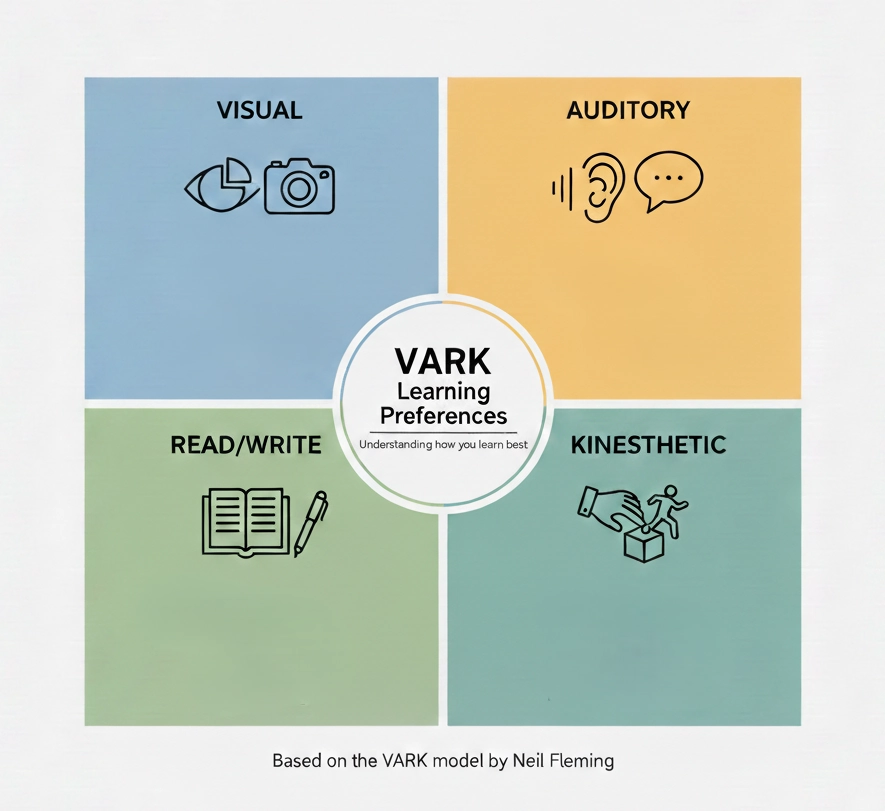
At a glance: Learning styles—visual, auditory, read/write, and kinesthetic—can become a significant barrier to learning English when teaching methods fail to align with a student’s natural processing habits. By implementing a multisensory approach and identifying individual VARK preferences, educators can improve student engagement and accelerate language acquisition.
The six primary learning styles in ESL
Auditory learners
- Barrier: Visual-heavy teaching methods or reliance on text without much oral practice can hinder their learning. If English classes do not provide enough opportunities for listening and speaking, these learners might find it harder to pick up the language.
- Adaptation: They thrive with language learning apps that emphasize pronunciation, listening exercises, podcasts, or language exchange where speaking is central. To get the most out of these, a pair of high-quality noise-cancelling headphones can help learners focus on subtle phonemic sounds without distraction.
| Learning style | Primary barrier | Best adaptation |
| Visual | Lack of imagery/charts | Infographics and color-coded grammar |
| Auditory | Text-heavy curriculum | Podcasts and phonemic awareness drills |
| Kinesthetic | Long periods of sitting | Total Physical Response (TPR) activities |
| Reading/Writing | Purely oral exams | Journaling and translated scripts |
Kinesthetic/tactile learners
- Barrier: Traditional classroom setups with little movement or hands-on activities can be demotivating or less effective. Memorizing vocabulary or grammar rules through reading or listening might not be as impactful for them.
- Adaptation: They benefit from interactive activities like role-playing, using physical objects to learn vocabulary (e.g., using flashcards or real-life items), or language games that involve movement. Using customizable blank flashcards or a desktop dry-erase board allows for the physical movement necessary to cement new words in memory.
Logical learners
- Barrier: These students often struggle with the “chaos” of English, such as irregular verbs or idiomatic expressions that lack a predictable pattern.
- Adaptation: They thrive when language is presented as a system. Use sentence framing, grammar formulas, and comparative linguistics to show the “why” behind the rules.
Reading/writing learners
- Barrier: Purely conversational classes without text support might leave these learners feeling overwhelmed. They need a “paper trail” to feel secure in their progress.
- Adaptation: They do well with grammar exercises, essay writing, reading comprehension activities, and translating texts, which all align with their preference for processing information through text.
Social vs. solitary learners
- Barrier: Social learners might find solitary learning environments like self-study or online courses without interaction less effective, while solitary learners might feel overwhelmed or distracted in highly interactive group settings.
- Adaptation: Social learners benefit from group work, language cafes, or exchange programs, whereas solitary learners might excel in one-on-one tutoring, self-paced learning modules, or when they can study in quiet, personal settings.
Visual learners
- Barrier: They might struggle if the teaching method focuses heavily on auditory learning, like listening to lectures or conversations without visual aids. English textbooks that lack diagrams, charts, or visual vocabulary aids might not be as effective for them.
- Adaptation: They benefit from materials that include pictures, videos, or infographics that illustrate language concepts, grammar rules, or vocabulary. A visual English grammar guide is an excellent resource for those who find traditional text-only textbooks overwhelming.
Strategies to overcome learning barriers
To ensure every student succeeds, educators and self-guided learners should implement the following strategies:
- Diverse teaching methods: Incorporate a variety of techniques to cater to different learning styles simultaneously.
- Customized learning paths: Use adaptive technology or personalized feedback to allow students to focus on their strengths.
- Awareness and adaptation: Teachers should help students identify their own styles so they can seek out supplemental materials that work for them.
Understanding and accommodating different learning styles makes English acquisition more accessible, enjoyable, and effective.
Frequently asked questions about ESL learning barriers
This is part of the series, Common challenges faced by ESL students.
More from our series: Common challenges faced by ESL students
- Common challenges faced by ESL students
- Current: Different learning styles: A hidden barrier to learning English
Discover more from English Learning Tips
Subscribe to get the latest posts sent to your email.


