

English plural rules: A complete guide for ESL learners (with Examples)

In English, one small letter does a lot of heavy lifting.
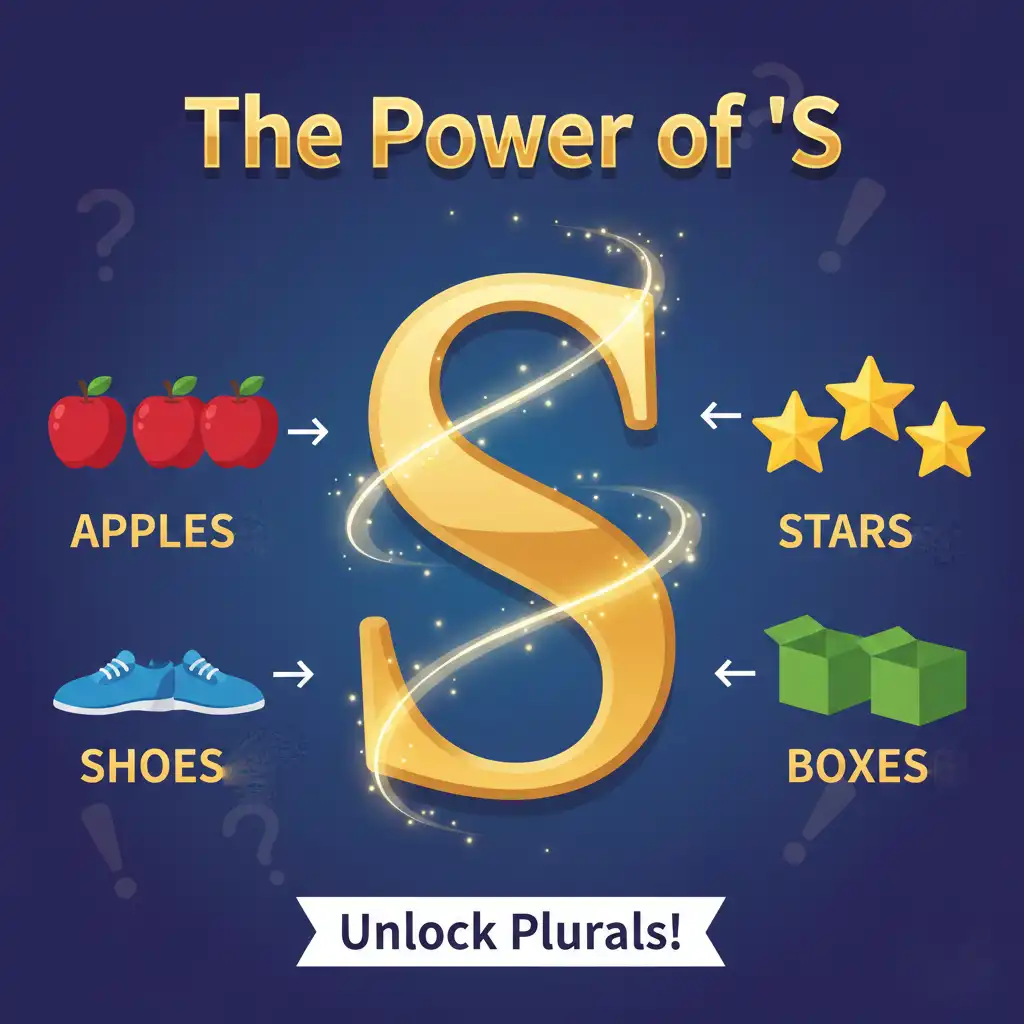
The letter “s” turns a single object into many, changes meaning, and helps speakers understand quantity instantly. For English learners, mastering plurals is a quiet but powerful step toward sounding confident and natural.
This post explores how plurals work in English, why the rules exist, and what learners should watch out for when using the famous “s” power.
Why plurals matter in English
Plural nouns allow speakers to describe the world accurately. Without them, English would be vague and confusing. Saying three book instead of three books may still be understood, but it sounds incomplete and non-native.
Because English is spoken globally, plural rules have become one of the most noticeable markers of fluency for ESL speakers.
Guide to English plurals
| Type of plural | Rule/pattern | Examples | Why it exists/notes |
| Regular plurals | Add -s | cars, students, ideas | The foundational rule for most English nouns. |
| Difficult endings | Add -es (for nouns ending in s, sh, ch, x, z) | buses, dishes, churches, boxes | Makes pronunciation easier by adding a syllable. |
| Ending in “y” | Consonant + y -> -ies; Vowel + y -> -s | city/cities; boy/boys | Reflects the interaction between spelling and sound. |
| Irregular plurals | Memorize specific changes | children, men, mice | Rooted in the historical evolution of the language. |
| No change | Singular and plural forms are identical | sheep, fish, deer | Relies entirely on context to show quantity. |
| Uncountable nouns | No plural form (do not add -s) | information, furniture, advice | Represent abstract ideas or groups, not individual items. |
The basic rule: Adding “s”
The majority of English nouns form the plural by adding -s. This simple rule covers most everyday vocabulary and is the foundation of pluralization in English.
Words like cars, students, and ideas all follow this pattern. It is the first plural rule most learners encounter, and the one used most often in daily communication.
- Car –> Cars
- Student –> Students
- Idea –> Ideas
When English adds “es”
Some nouns require -es instead of -s, especially when they already end in sounds that make pronunciation difficult. Words ending in s, sh, ch, x, or z typically follow this pattern.
This extra syllable makes the word easier to say and easier to hear, which explains why English evolved this rule.
- Bus –> Buses
- Wish –> Wishes
- Box –> Boxes
The special case of “y”
Nouns ending in y show how spelling and sound interact in English. When a consonant comes before y, the word changes to -ies in the plural. When a vowel comes before y, it simply adds -s.
- Consonant + y: Change the “y” to -ies (e.g., City –> Cities).
- Vowel + y: Just add -s (e.g., Boy –> Boys).
This rule reflects pronunciation patterns rather than meaning, which can be surprising for learners at first.
Irregular plurals: English history at work
Not all English plurals follow neat rules. Words like children, men, and mice come from older forms of English and other languages that influenced it over time.
- Person –> People
- Tooth –> Teeth
- Foot –> Feet
These irregular plurals are common in daily speech, which makes them important—but they must be memorized rather than learned through rules.
Because these irregular forms are remnants of older Germanic roots, they are often referred to as ‘mutated’ or ‘strong’ plurals. You can learn more about the history of English plurals via the Oxford English Dictionary.
Nouns that do not change
Some nouns remain the same whether they are singular or plural. Words like sheep, fish, and deer rely on context instead of spelling changes to show quantity.
- Sheep (One sheep, two sheep)
- Fish (though “fishes” is used in specific scientific contexts)
- Deer
- Series
For ESL learners, these words can feel unusual, but they are limited in number and easy to recognize with exposure.
Common ESL errors with plurals
One of the most frequent mistakes English learners make is adding -s to nouns that are uncountable, such as information, furniture, or advice. These words represent ideas or groups rather than individual items.
- Incorrect: I need some furnitures. –> Correct: I need some furniture.
- Incorrect: Give me some advices. –> Correct: Give me some advice.
Another common issue is overusing regular plural forms for irregular nouns, such as saying childs instead of children.
If you find that irregular plurals are giving you trouble, having a structured reference book nearby can be incredibly helpful. I highly recommend English Grammar in Use by Raymond Murphy, which provides clear exercises that make these tricky exceptions much easier to master
Why the “s” power deserves attention
Plural accuracy improves clarity, confidence, and credibility. Whether in writing, conversation, or exams, correct plural usage signals strong control of English basics.
For many learners, mastering plurals is a turning point where English begins to feel structured rather than unpredictable.
FAQ: Frequently asked questions about plurals
Recommended practice resources
“Mastering plurals is all about consistent practice. For learners who prefer a physical book to supplement their studies, I suggest:
- The Elements of Style by Strunk & White: A classic guide that helps you understand the nuance and structure of the English language.
- Oxford Modern English Grammar by Bas Aarts: An excellent resource for those who want a deeper dive into the ‘why’ behind English grammar rules.
Final thought: mastering the English plural
The letter “s” may be small, but its impact on English communication is enormous. By understanding the foundational rules for regular plurals, the phonetic logic behind “-es” endings, and the historical exceptions of irregular nouns, you are taking a massive step toward sounding more confident and natural.
Consistent practice and “noticing” these patterns in your daily reading will turn these rules from abstract concepts into a second-nature skill. Remember, even native speakers sometimes stumble over complex plurals—what matters most is that you keep listening, learning, and refining your usage.
Join the conversation: share your experience
Do you find irregular plurals like “mice” or “teeth” harder to remember than the standard “-s” rule? Or is there a specific noun that always makes you double-check your grammar?
Let us know in the comments section below! Sharing your questions or your own tips for memorizing these rules helps other learners in our community. If you found this guide helpful, please share it with a friend or colleague who is also working on their English fluency journey.
Discover more from English Learning Tips
Subscribe to get the latest posts sent to your email.


