

20 Common colloquialisms in American English: Meanings and examples

American English is full of expressions that bring color and character to everyday conversations. These colloquialisms—informal phrases that capture humor, wisdom, and cultural nuances—act as a shorthand for shared experiences.
From coast to coast, these sayings reflect the creativity of American speech. Whether you are a native speaker or an English learner, mastering these phrases helps you navigate social situations with ease and understand the subtle “heart” of American culture.
American colloquialisms at a glance
If you are in a rush, here is a quick reference table of the most common informal expressions used in the United States today.
| Colloquialism | Meaning | Common usage |
| Bite the bullet | Face a tough situation bravely | “I had to bite the bullet and pay for the repairs.” |
| Piece of cake | Something very easy | “That exam was a piece of cake.” |
| Under the weather | Feeling sick or unwell | “I’m staying home; I’m a bit under the weather.” |
| Break the ice | Relieve social tension | “A quick joke helped break the ice at the meeting.” |
| Spill the beans | Reveal a secret | “Don’t spill the beans about the surprise party!” |
| Cut to the chase | Get to the point | “Stop the small talk and cut to the chase.” |
If you want to master over 1,300 phrases, we highly recommend The Great Book of American Idioms. It’s the highest-rated guide for learning how to sound like a native speaker in real-life conversations.
20 Essential American idioms and phrases
1. Kick the bucket
Meaning: To die.
Usage Note: This is highly informal and sometimes seen as irreverent. You would use this regarding an old lawnmower or a fictional character, but avoid saying “I’m sorry your grandmother kicked the bucket,” as it lacks the necessary empathy for grieving.
2. Bite the bullet
Meaning: To accept something difficult or unpleasant because it is unavoidable.
Example: “I didn’t want to wake up at 4:00 AM, but I bit the bullet to beat the traffic.”
3. Spill the beans
Meaning: To accidentally or prematurely give away a secret.
Example: “We were trying to keep the engagement a secret, but my little brother spilled the beans.”
4. Break the ice
Meaning: To start a conversation in a social setting to make people feel more comfortable.
Example: “The host played a game to break the ice among the guests.”

5. Under the weather
Meaning: To feel ill, though usually not seriously. It often refers to headaches, colds, or exhaustion.
Example: “I’m feeling a bit under the weather, so I’ll skip the gym today.”
6. The ball’s in your court
Meaning: It is now your responsibility to make the next move or decision.
Example: “I’ve sent over my final offer; now the ball’s in their court.”
7. Barking up the wrong tree
Meaning: To follow a wrong line of thought or accuse the wrong person.
Example: “If you think I’m the one who ate your lunch, you’re barking up the wrong tree.”
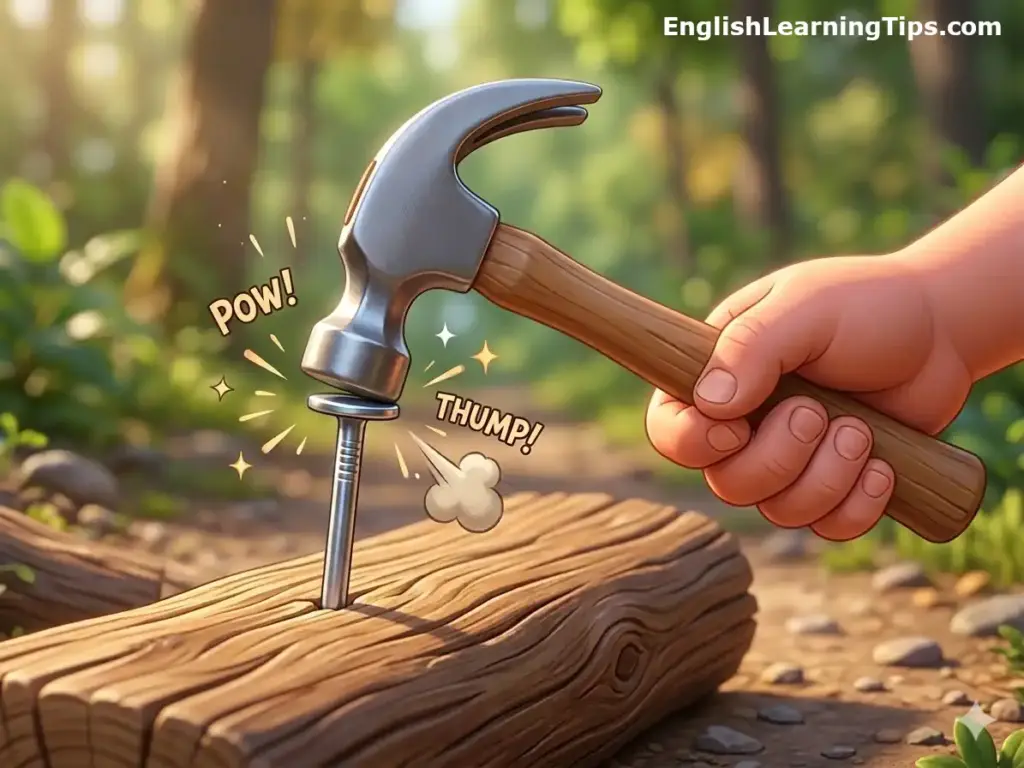
8. Hit the nail on the head
Meaning: To describe exactly what is causing a situation or to be precisely correct.
Example: “You hit the nail on the head when you said the budget was the main problem.”
9. Let the cat out of the bag
Meaning: To reveal a secret, often by mistake.
Example: “He let the cat out of the bag about the company’s merger during lunch.”
10. Cut to the chase
Meaning: To skip the unimportant details and reach the most important part of a story or deal.
Example: “We don’t have much time, so let’s cut to the chase: how much will this cost?”
11. Piece of cake
Meaning: A task that is incredibly simple to complete.
Example: “After studying for weeks, the final exam was a piece of cake.”
12. On the fence
Meaning: To be undecided between two choices.
Example: “I’m still on the fence about whether to buy a truck or a sedan.”
13. Burn the midnight oil
Meaning: To work or study late into the night.
Example: “The whole team burned the midnight oil to get the app ready for launch.”
14. Beat around the bush
Meaning: To avoid talking about the main topic or to avoid being direct.
Example: “Stop beating around the bush and just tell me if you’re quitting.”
15. Out of the blue
Meaning: Something that happens unexpectedly and without warning.
Example: “I hadn’t heard from him in years, then he called me out of the blue.”
16. In the same boat
Meaning: To be in the same difficult circumstances as others.
Example: “We’re all in the same boat with these new tax laws.”
17. Hold your horses
Meaning: A way to tell someone to slow down or be patient.
Example: “Hold your horses! We can’t leave until the tickets arrive.”
18. Through the grapevine
Meaning: To learn information via gossip or informal communication rather than official sources.
Example: “I heard through the grapevine that the manager is being promoted.”
19. Get a kick out of
Meaning: To find something very funny or enjoyable.
Example: “I really get a kick out of seeing my dog try to catch bubbles.”
20. Rain on someone’s parade
Meaning: To lessen someone’s happiness or ruin their plans.
Example: “I hate to rain on your parade, but the beach trip is canceled due to the storm.”
A note on “Contrastive Reduplication” in American English
A unique feature of American slang is the repetition of words to indicate “realness” or “extremeness.” You might hear someone say, “I’m not stupid stupid,” or “It’s not cold cold.”
This means the person isn’t truly or extremely that way. However, pay attention to your pacing. If you pause between the words—”I’m not stupid, [pause] stupid”—it changes the meaning entirely. In that case, you are calling the person you are talking to “stupid,” which is considered rude. To use this colloquialism correctly, say the repeated words quickly together without a break.
Frequently asked questions about American colloquialisms
Visual tools for learning
Video: English colloquialisms
Video: Popular American slang
Conclusion
American colloquialisms are more than just “slang”; they are the cultural glue that holds conversations together from New York to California. Whether you are cutting to the chase in a business meeting or spilling the beans with friends, these expressions help you sound more natural and relatable.
Expand your vocabulary
If you enjoyed learning these American phrases, explore our other guides:
- 20 Common colloquialisms in British English
- Common colloquialisms in Irish English
- Common colloquialisms in Scottish English
What’s your favorite American saying?
We want to hear from you! Is there a local phrase from your hometown that we missed? Or maybe there is an American colloquialism that always confused you?
Drop a comment below and let us know which expression is your favorite (or least favorite) to use. If you found this guide helpful, share it with a friend who is learning English or planning a trip to the United States. Your shares help us keep the conversation going!
Discover more from English Learning Tips
Subscribe to get the latest posts sent to your email.


