
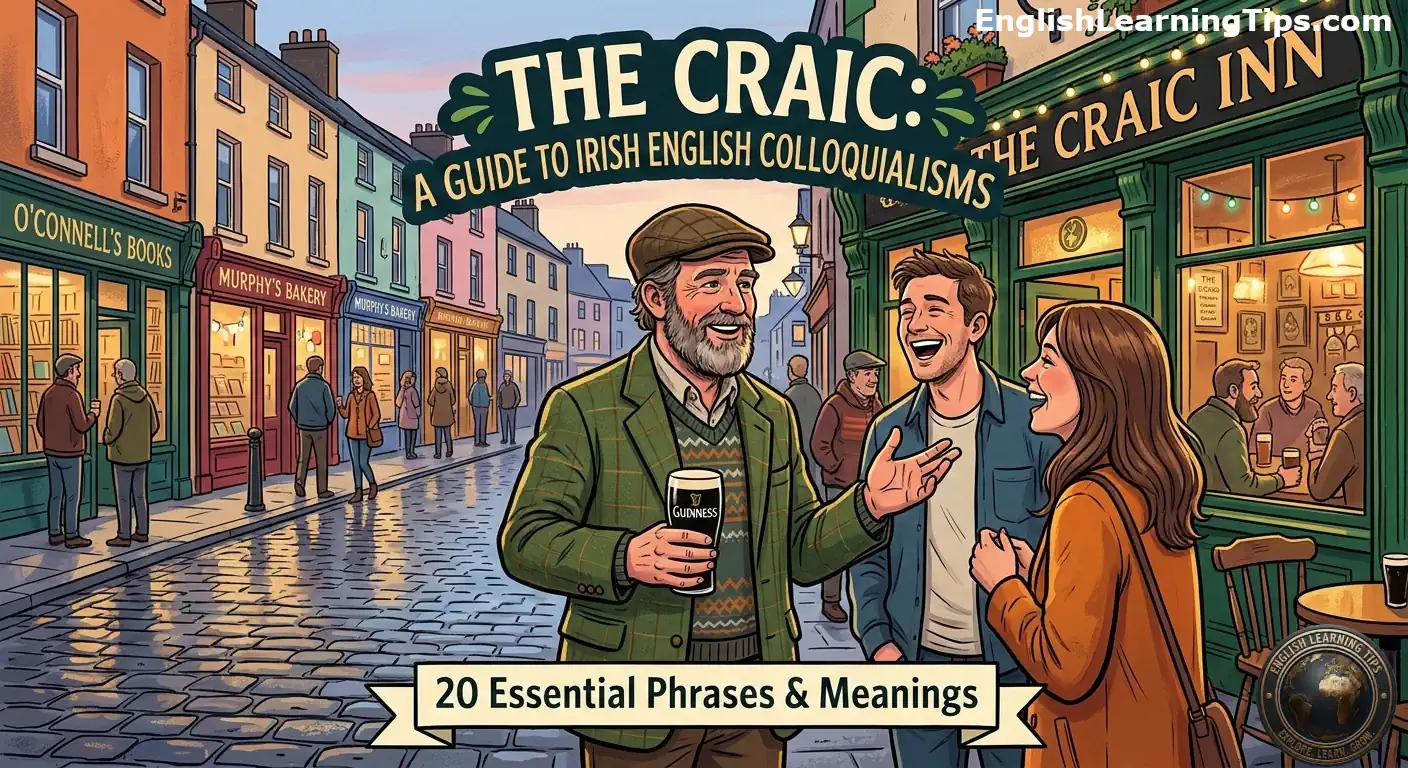
A guide to common colloquialisms in Irish English: Understanding Hiberno-English

Irish English, or Hiberno-English, is far more than just a charming accent. It is a linguistic blend shaped by the Irish language (Gaeilge), a history of rebellion, and a distinct sense of humor. Whether you are planning a trip to Dublin or just trying to understand your favorite Irish sitcom, mastering these colloquial phrases is essential.
Why is Irish slang so unique?
The syntax of Irish English often mirrors the structure of the Irish language. For example, the phrase “He’s gone to the happy hunting grounds” is a gentle euphemism for a pet passing away, reflecting the poetic and sometimes indirect nature of Irish speech.
Top 20 Irish colloquialisms and their meanings
| Phrase | Meaning | Example sentence |
| Grand | Fine, okay, or “no problem.” | “The tea is grand, thanks.” |
| Craic | Fun, gossip, or news. | “The craic was mighty last night!” |
| Yer man / Yer wan | That guy / That girl. | “Yer man in the shop was very helpful.” |
| Eejit | A harmless fool or idiot. | “You’re a total eejit for forgetting your coat.” |
| Gas | Hilarious or funny. | “That story about the sheep was absolute gas.” |
| Bold | Naughty (usually referring to children). | “Stop being bold and sit down.” |
| Gobshite | Someone who talks nonsense. | “Don’t listen to that gobshite.” |
| Knackered | Extremely tired. | “I’m knackered after the hike.” |
| Wrecked | Completely exhausted. | “I was wrecked after the wedding.” |
| Deadly | Fantastic or brilliant. | “That new jersey is deadly.” |
| Shift | To kiss or make out. | “Did you hear who he shifted at the disco?” |
| Mitch/On the hop | To skip school or work (truancy). | “We used to mitch off school to go to the park.” |
| Banjanxed | Broken or ruined beyond repair. | “The engine is completely banjanxed.” |
| Acting the maggot | Playing the fool or being annoying. | “Stop acting the maggot and get to work.” |
| Fair play | Well done / Good job. | “Fair play to you for passing that exam.” |
| Culchie | Someone from the countryside. | “He’s a proper culchie, obsessed with the GAA.” |
| Gaff | One’s house or home. | “There’s a party at my gaff tonight.” |
| Sláinte | Cheers (literally “health”). | “Sláinte!” she said, raising her Guinness. |
| Sound | Reliable, cool, or a “good person.” | “Cheers for the lift, you’re sound.” |
| What’s the craic? | How are you? / What’s happening? | “Hey, what’s the craic with the match?” |
Cultural nuances: Dublin vs. rural Ireland
While “grand” is universal, some slang is regional. A culchie (someone from rural Ireland) might use different terminology than a “Jackeen” (a Dubliner). However, the playful, self-deprecating tone remains a staple of Irish identity across the island.
Pro tip: If someone asks “What’s the craic?”, they aren’t asking for a literal report. A simple “Not much, you?” or “The craic is 90” (it’s great) will suffice.
Frequently asked questions about Irish colloquialisms
Final thoughts on Irish colloquialisms
Navigating the linguistic landscape of Ireland is about more than just memorizing a vocabulary list; it is about embracing a culture that finds humor in the mundane and poetry in the everyday. Whether you are “banjanxed” after a long flight or looking for some “mighty craic” in a local pub, using these Hiberno-English phrases will help you connect more deeply with the people you meet.
While the “happy hunting grounds” might be a gentle farewell to a beloved pet, the Irish language itself is very much alive in these modern expressions. From the “jacks” to the “hot press,” the way people speak on the Emerald Isle is a testament to a resilient and witty heritage.
Happy hunting grounds: While used in Ireland, this is actually a Native American concept (Algonquian) that entered the English lexicon globally.
Share your favorite Irish slang
Did we miss your favorite expression? Or perhaps you have a hilarious story about a time you misunderstood “I will, yeah”?
Leave a comment below with the Irish colloquialisms you use most, or tell us which phrase surprised you the most! If you found this guide helpful for your next trip or just for a laugh, share it with a friend who needs a bit more “grand” in their life.
Explore more regional dialects
If you enjoyed learning about the local lingo of the Emerald Isle, you might find these guides helpful:
- 20 common colloquialisms in American English
- 20 common colloquialisms in British English
- Common colloquialisms in Scottish English
Discover more from English Learning Tips
Subscribe to get the latest posts sent to your email.


