


Workplace stress: Common causes and how to talk about them

Workplace stress is more than just a busy day; it is a chronic feeling of pressure that affects both physical health and career performance. Whether you are preparing for a performance review or discussing your mental health with a peer, being able to accurately describe these workplace stressors is the first step toward managing them.
Below, you’ll find the most common occupational stress triggers categorized by their impact on your daily routine.
Identifying the core drivers of job stress
Stress rarely has a single source. Usually, it is a combination of environmental factors and organizational structure. To help you categorize your experiences, we have outlined the most common stressors below.
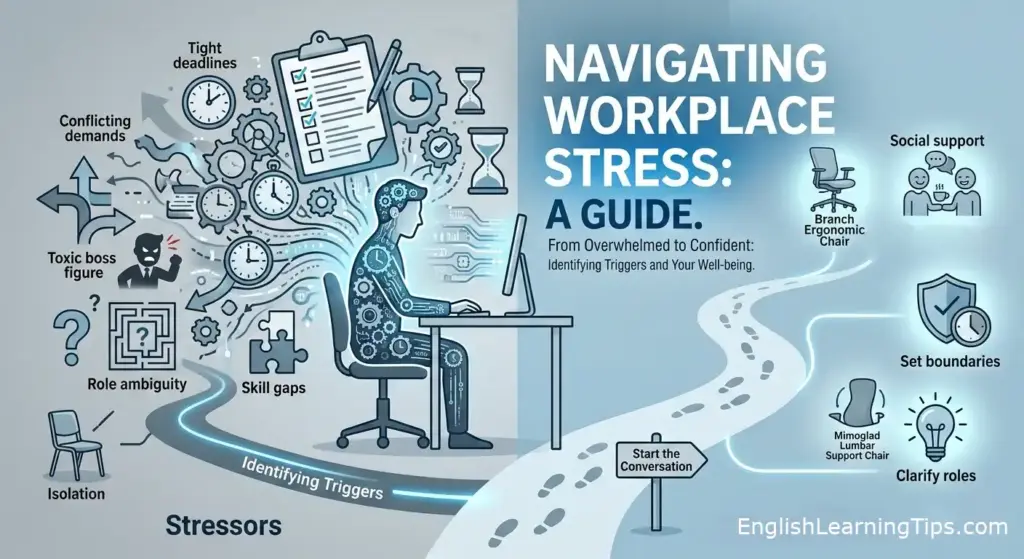
Workload and time management
The most common form of stress stems from a mismatch between tasks and time.
- Excessive workload: Having a “to-do list” that is physically impossible to complete within standard hours.
- Tight deadlines: Feeling constant pressure from unrealistic timeframes.
- Poor work-life balance: When long hours or overtime begin to encroach on your personal life.
- Lack of autonomy: Feeling unable to influence the pace or volume of your daily tasks.
Job role and clarity
Ambiguity is a major silent stressor. If you don’t know what “success” looks like, you will likely feel anxious.
- Role ambiguity: Uncertainty about your specific position and how it fits into the company.
- Conflicting demands: Being pulled in different directions by different managers.
- Skill gaps: Feeling inadequately trained or under-equipped for your current responsibilities.
Management and company culture
- Poor management: Lack of support, unfair treatment, micromanagement, or poor communication from supervisors.
- Lack of participation in decision-making: Feeling excluded from decisions that affect your work.
- Poor communication: Inadequate or unclear information from management or between colleagues.
- Lack of support from colleagues or supervisors: Feeling isolated or unsupported in challenging situations.
- Toxic workplace culture: Negative interpersonal dynamics, bullying, harassment, discrimination, or lack of trust.
- Lack of recognition or reward: Feeling unappreciated for your efforts and contributions.
- Limited opportunities for growth or advancement: Feeling stuck in your career with no prospects for development.
- Organizational change: Uncertainty and anxiety related to restructuring, new management, or changes in job roles.
Interpersonal relationships
- Conflict with colleagues or bosses: Experiencing interpersonal friction or disagreements at work.
- Bullying or harassment: Being subjected to offensive, intimidating, or malicious behavior.
- Poor relationships at work: Lack of positive social connections or support from coworkers.
Work environment and resources
- Poor physical working conditions: Uncomfortable office space, inadequate lighting, noise, lack of proper equipment.
- Job insecurity: Fear of losing your job due to organizational instability or economic factors.
- Difficult commute: Stress associated with long or challenging travel to and from work.
Pro-tip: Combat physical stress
f your office setup is causing back pain, upgrading to a Branch Ergonomic Chair
or a budget-friendly Mimoglad Lumbar Support Chair can significantly reduce the ‘physical load’ of your workday.
For some example conversations, see “Talking about stress in English: Stress-related vocabulary“.
Frequently asked questions about workplace stress and burnout
Key takeaways for managing your professional well-being
| Strategy | Actionable step | Expected outcome |
| Set boundaries | Disable work notifications after 6:00 PM. | Reduced “always-on” anxiety. |
| Clarify roles | Request a “Role Clarity” meeting with your lead. | Decreased stress from ambiguity. |
| Social support | Schedule a non-work “coffee chat” with a peer. | Lowered feelings of isolation. |
Final thoughts: Building a resilient career
Workplace stress is an evolving challenge, especially as we navigate and balance the intersection of remote work, AI integration, and shifting organizational cultures. While identifying the causes—like role ambiguity or heavy workloads—is the first step, the real transformation happens when you start the conversation.
By mastering the vocabulary of professional boundaries and mental well-being, you take back control of your career trajectory. Remember, a healthy work environment isn’t just a “nice-to-have”; it is the foundation of long-term professional success and personal happiness.
Join the conversation
We want to hear from you. The more we share our experiences, the more we can de-stigmatize the conversation around mental health at work.
- What is the number one stressor in your current role?
- Have you found a specific phrase or “script” that worked when talking to your manager about burnout?
Drop a comment below to share your insights. If you found this guide helpful for your speaking practice or career management, share it with a colleague or friend who might be feeling the pressure. Let’s build a more supportive professional community together.
Helpful resources for managing stress
If you are struggling with your mental health, these organizations offer expert guidance and practical tools:
- CDC Mental Health: Tools for living with stress
- NHS Self-Help: Tips to reduce stress and anxiety
- NIMH Fact Sheet: Understanding the “stressed out” feeling
- Mayo Clinic: Proven stress relievers for daily life
Discover more from English Learning Tips
Subscribe to get the latest posts sent to your email.


