
Mnemonic devices: A guide to improving memory and learning efficiency

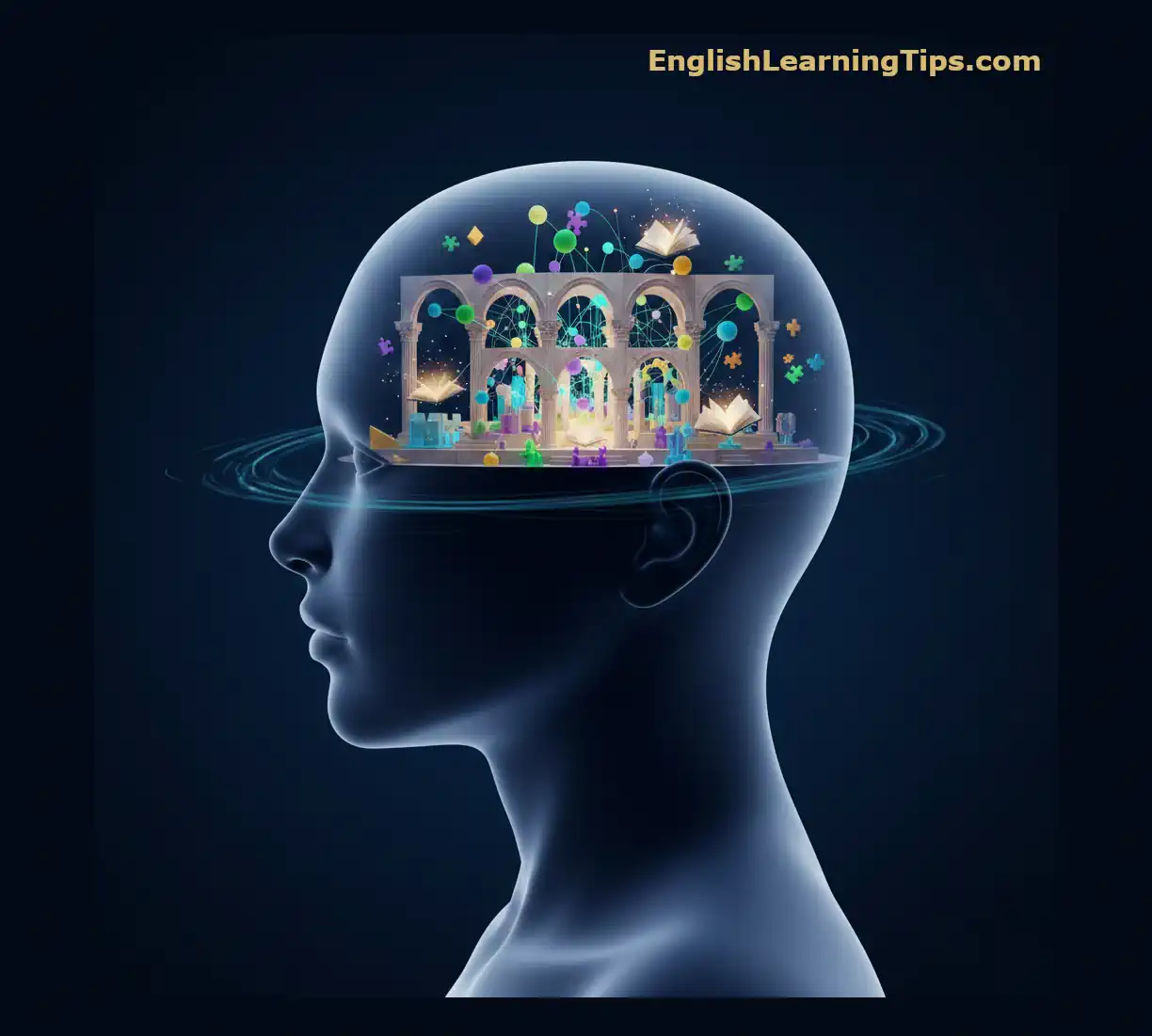
Mnemonic devices are powerful memory aids designed to help students, professionals, and lifelong learners retain information more effectively. By leveraging patterns, associations, and visualization, these techniques transform abstract data into memorable mental hooks, making it easier to recall lists, complex facts, and sequences.
You don’t need a degree in neuroscience to use these; cognitive scientists have been studying them for decades, and the results are pretty clear. Studies consistently show significant, measurable gains in recall speed and long-term retention compared to rote memorization.
What are mnemonic devices?
Mnemonic devices—often called “mnemonics“—are cognitive strategies used to assist in the encoding, retention, and retrieval of information. Instead of relying on rote memorization, which is often inefficient, mnemonics work by linking new material to familiar structures, images, or sounds. By tapping into how the human brain naturally processes data, these tools make learning faster and more durable.
These devices are brilliant for encoding information, but they are most effective when your cognitive functions are primed for success. Before diving into these associations, ensure you are providing your brain the cognitive recovery and sleep it needs to actually consolidate these new memory hooks into your long-term storage.
Why mnemonic devices work
Mnemonics function by turning unrelated or abstract information into meaningful, organized structures. They promote elaborative encoding, a process where you connect new details to existing knowledge.
When you use a mnemonic, you create a “retrieval cue.” Brain imaging studies on memory athletes reveal that consistent use of these techniques reshapes functional connectivity in memory and visuospatial networks. For students, this means spending less time on tedious memorization and more time mastering high-level concepts.
Comparison of common mnemonic techniques
Choosing the right technique depends on the type of information you are trying to learn.
| Technique | Best use for | Example |
| Acronyms | Short lists | HOMES (Great Lakes) |
| Acrostics | Ordered lists | “My Very Educated Mother…” (Planets) |
| Rhymes | Rhythmic facts | “Thirty days hath September…” |
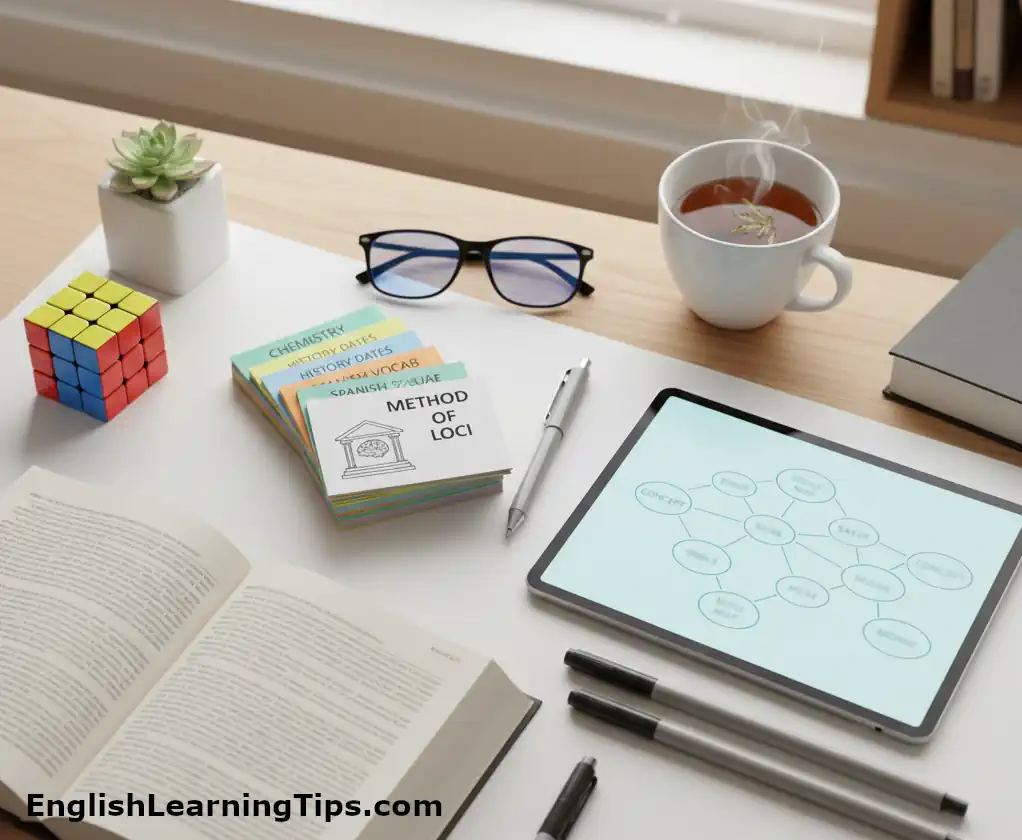
| Method of loci | Long sequences | A mental “memory palace” |
| Chunking | Numerical data | 123-456-7890 |
| Keyword method | Foreign language | “Carta” (letter) = a cart carrying mail |
If you want to master these techniques—especially the ‘Method of Loci’ or advanced memory systems—I highly recommend these classic guides:
- Moonwalking with Einstein by Joshua Foer (Great for understanding the science and story behind memory palaces).
- The Memory Book by Harry Lorayne and Jerry Lucas (The gold standard for practical mnemonic training).”
How to create your own mnemonic devices
You don’t need a photographic memory to benefit from these tools. Follow this step-by-step approach to build your own:
- Analyze the material: Identify the core facts, sequences, or lists you need to memorize.
- Select the right method: Choose a technique that matches the content. Use acronyms for short lists and the method of loci for complex, ordered sequences.
- Prioritize the bizarre: The brain remembers the unusual. Use exaggerated, humorous, or highly personal imagery to make your associations “stick.”
- Practice active recall: Test yourself without looking at your notes. If you can’t retrieve it, refine your mnemonic to be more vivid.
- Combine strategies: Pair your mnemonic with active recall and spaced repetition to cement the information into your long-term memory.
Integrating mnemonics with study habits
Mnemonics are most effective when used as part of a broader study system. They are not a replacement for understanding concepts; rather, they are a bridge to help you store foundational facts so your brain is free to analyze higher-level ideas.
- Pair with conceptual learning: Use mnemonics for terminology and dates, but use concept mapping for understanding how those facts relate to one another.
- Teach it: Explaining your mnemonic to someone else is one of the best ways to verify you have encoded the information correctly.
- Be consistent: Like any skill, your ability to create and use mnemonics improves with practice.
While mnemonics help you grasp complex information quickly, you should pair them with other proven strategies to ensure that information stays accessible:
- Master active recall: Don’t just rely on the mnemonic; force your brain to retrieve the concept without the trigger to test if the learning has truly ‘stuck.’
- Apply spaced repetition: Even a perfectly crafted mnemonic needs to be revisited. Use a spaced repetition schedule to ensure your associations don’t fade over time.
Mnemonic strategies for ESL learners and educators
For ESL learners, the primary challenge is often not just understanding language rules, but the sheer volume of vocabulary and idiomatic expressions that lack a direct logical anchor. Mnemonics function as a “mental bridge” for these learners, transforming abstract, unfamiliar sounds into vivid, relatable images or stories that bypass the frustration of rote memorization.
For educators, integrating mnemonics into the classroom is a high-leverage teaching strategy; it empowers students to take ownership of their learning, reduces language-acquisition anxiety, and provides a framework for students to create their own connections based on their unique cultural and linguistic backgrounds. By teaching students how to build these mental hooks, teachers provide a long-term toolkit that extends far beyond the ESL classroom.
Frequently asked questions about mnemonic devices
Video: Mnemonics: Memory tricks
Master your memory: Start your journey today
Mnemonic devices are more than just clever party tricks; they are scientifically backed tools that empower you to take control of how you learn and store information. By shifting from passive reading to active, structured encoding, you can reduce study fatigue, clear mental blocks, and boost your recall efficiency across any subject. Whether you are prepping for a high-stakes exam or simply looking to sharpen your cognitive edge, these techniques provide the bridge between simply seeing data and truly mastering knowledge.
Join the conversation
How has using mnemonics changed the way you study? Do you have a “secret” mental shortcut that saved you during a difficult exam? We want to hear what works for you—share your favorite memory hacks in the comments below to help others in our learning community.
If you found this guide helpful, please share it with a friend or classmate who is currently grinding through their studies. Let’s make learning faster, easier, and more effective for everyone.
Discover more from English Learning Tips
Subscribe to get the latest posts sent to your email.


