

Spaced repetition for improving long-term memory

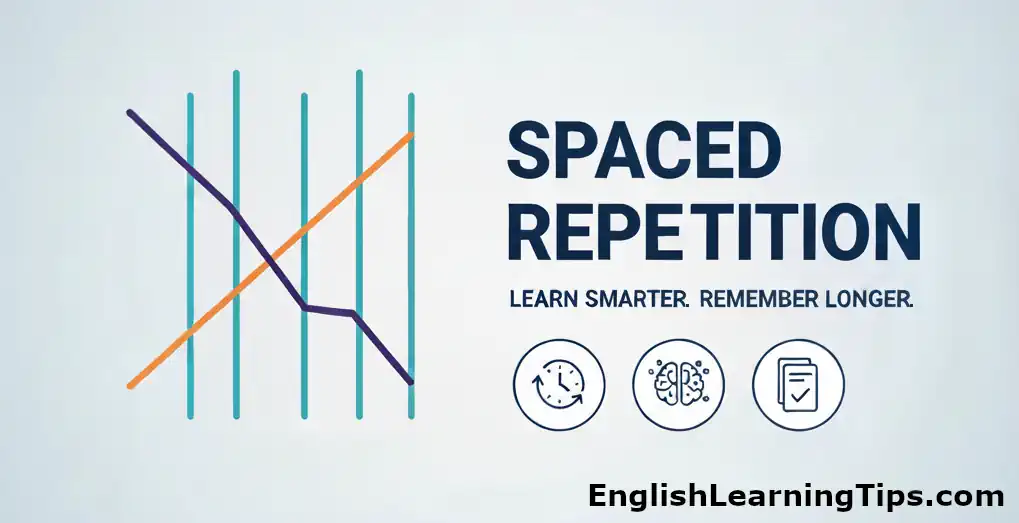
Spaced repetition is a science-backed learning technique that helps you transfer information from short-term to long-term memory. By reviewing material at gradually increasing intervals, you interrupt the natural forgetting curve. Rather than relying on ineffective cramming, this method ensures that you revisit content just before you are likely to forget it, which strengthens neural pathways and deepens retention.
I spent months brute-forcing my way through Spanish verb tenses, convinced that if I just reread my textbook enough times, the information would eventually stick. It didn’t. I was studying hard, but I was failing to retain anything because I was working against, not with, how the human brain actually encodes memory. That was the day I stopped cramming and started using spaced repetition along with other memory techniques.
What is spaced repetition?
Spaced repetition—sometimes referred to as distributed practice or spaced learning—is a method of active recall that involves reviewing information multiple times with expanding gaps between sessions.
Unlike massed practice (cramming), which can cause cognitive fatigue and lead to rapid knowledge loss, spaced repetition allows time for memory consolidation. Research indicates that this approach is significantly more effective for retaining information over weeks, months, or even years.
To get the best results, you must ensure your brain is physically capable of forming those long-term memories through proper cognitive recovery and sleep.
Spaced repetition is for memory, not necessarily for concept building. Spaced repetition won’t teach you how to understand a complex math theory—it will ensure you don’t forget the formulas once you’ve already grasped the concept.
The science behind spaced repetition and long-term memory
The roots of this technique lie in the work of psychologist Hermann Ebbinghaus in the 1880s. Ebbinghaus mapped the “forgetting curve,” which demonstrates how quickly we lose new information without reinforcement.
Modern cognitive science has confirmed that spaced practice consistently outperforms cramming. The “spacing effect” occurs because each review session forces the brain to perform “harder” retrieval. This effort reinforces retrieval pathways and creates more durable, long-term neural encoding.
To make your review sessions even more effective, pair your spaced repetition schedule with these two techniques:
- Mastering active recall: Instead of just reviewing your notes, use active recall during your scheduled study slots to force your brain to retrieve the information.
- Using mnemonic devices: If you find certain concepts harder to remember, integrate mnemonic devices into your spaced repetition cards to create stronger mental hooks.
Spaced repetition vs. cramming: Key differences
Understanding the difference between these two approaches is essential for anyone looking to optimize their study habits.
| Feature | Spaced repetition | Cramming (massed practice) |
| Long-term recall | High and durable | Rapidly fades |
| Study efficiency | High (fewer total hours) | Low (requires relearning) |
| Memory consolidation | Allows for deep encoding | Causes cognitive overload |
| Best for | Sustainable, long-term mastery | Last-minute, temporary needs |
How to implement spaced repetition effectively
To maximize the benefits, integrate these three habits into your workflow:
- Prioritize active recall: Do not simply reread notes. Test yourself by using flashcards or practice questions to force your brain to retrieve the information.
- Use a systematic schedule: You don’t need to guess when to review. Use a proven interval system like the 2357 method or allow an algorithm to track your progress. Just remember, the 2357 method is a rule of thumb but not necessarily a rigid law.
- Start immediately: The best time to begin your first interval is shortly after learning the new material.
Spaced repetition requires deep, focused work. I’ve found that trying to review flashcards in a noisy environment kills my concentration. If you find yourself losing focus easily, a pair of reliable noise-canceling headphones can be a game-changer for getting into that ‘flow state’.
Popular spaced repetition apps and tools
In 2026, several digital tools can automate your scheduling, removing the need for manual tracking.
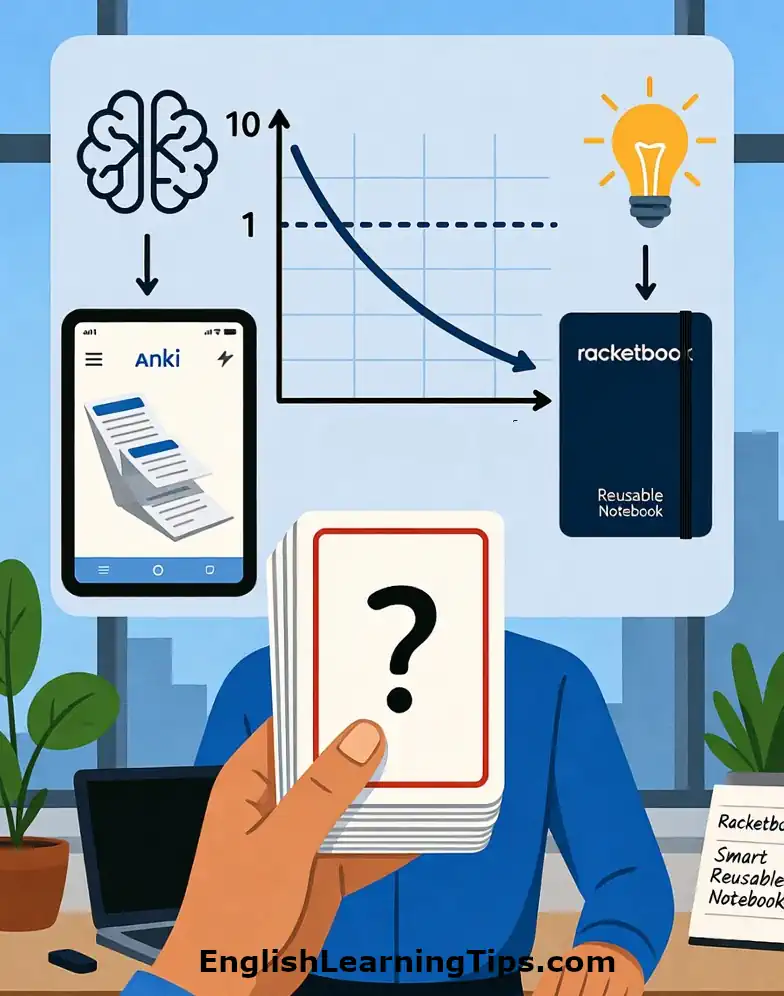
- Anki: The industry standard for serious learners. It features a highly customizable algorithm and supports complex card types.
- Quizlet: Excellent for beginners or those who prefer sharing user-generated sets.
- Brainscape: A solid alternative that focuses on cognitive science principles and ease of use.
- Memrise: Particularly useful for language acquisition and vocabulary building.
- Recommended tool: Rocketbook Smart Reusable Notebook — This allows you to handwrite your study notes, scan them directly to your cloud storage, and then wipe the pages clean to reuse. It’s perfect for those who want to keep their study area clutter-free.
Pro-tip: If you find yourself failing the same card twice, stop. Don’t try to brute-force it. Rewrite the card in your own words, or add a personal connection to make it “stick.
Example schedule for long-term retention
If you are learning a new set of facts or vocabulary, you can adapt your intervals based on difficulty.
- Initial learning: Day 1
- First review: Day 2
- Second review: Day 4
- Third review: Day 7
- Fourth review: Day 14
- Maintenance: One month, then three months
Note: If you find an item difficult, shorten the interval; if it is easy, lengthen it.
Frequently asked questions about spaced repetition
Mastering your memory: A final look at spaced repetition
Spaced repetition is more than just a study hack; it is a fundamental shift in how we approach learning. By moving away from the “all-at-once” pressure of cramming and embracing the power of the forgetting curve, you can achieve deeper, more durable knowledge with less total effort. Whether you are prepping for a high-stakes exam or learning a new language, the key to long-term success is consistency—not intensity.
Start your journey today
The best time to implement these habits is right now. You don’t need a perfect system to start; you just need to pick one concept, create a simple flashcard, and schedule your first review.
What is your experience with spaced repetition? Have you found a particular app or scheduling method that finally helped you break through a learning plateau? Or perhaps you have a favorite strategy for avoiding burnout during long-term study projects? Share your thoughts or your personal study routine in the comments below! If you found this guide helpful for your learning journey, please share it with a friend or colleague who is currently balancing a heavy workload—they will thank you for saving them hours of future study time.
Discover more from English Learning Tips
Subscribe to get the latest posts sent to your email.


