

Understanding subject-verb-object: The backbone of English sentences

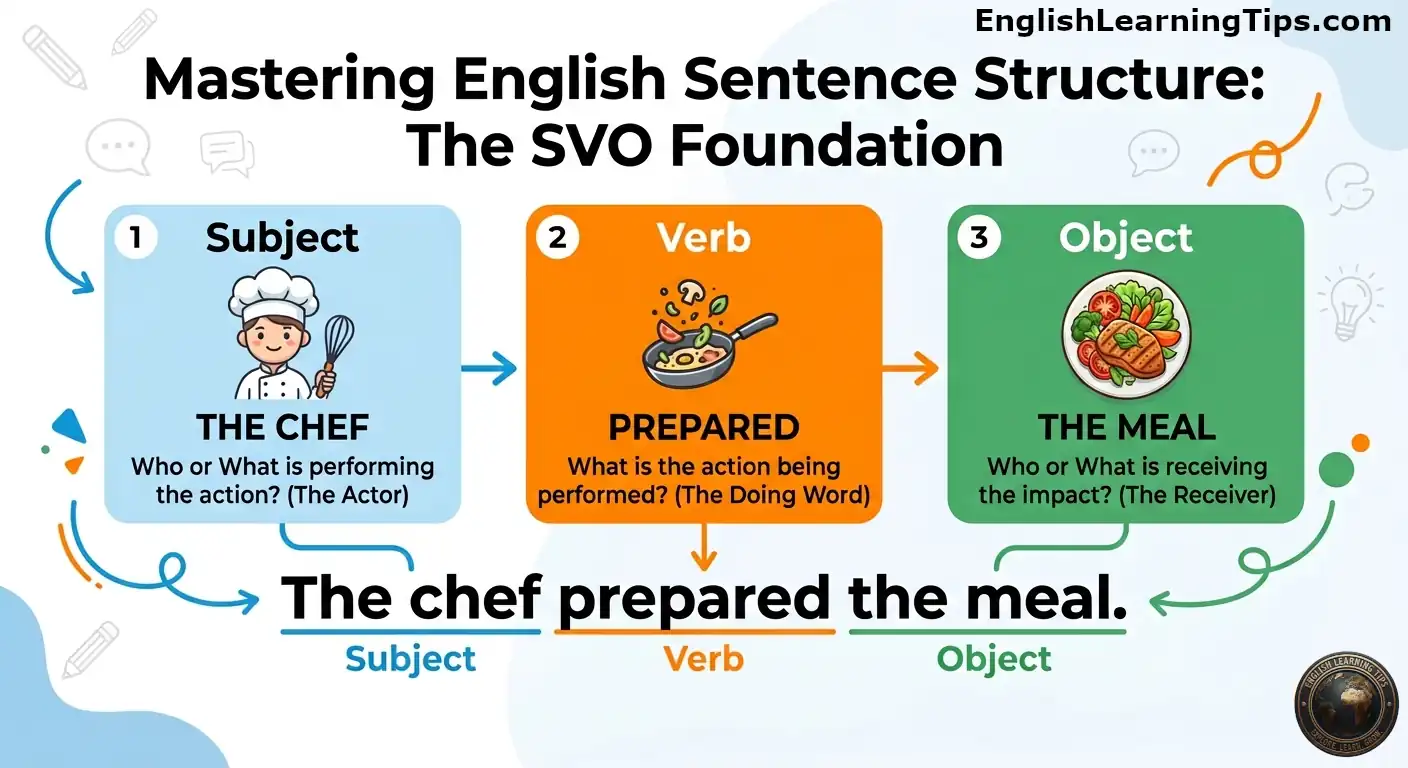
Subject-verb-object (SVO) is the most common way we organize thoughts in English. It defines the specific sequence of who performs an action, what that action is, and who or what receives the impact.
While SVO feels intuitive to native speakers, it is only one of several ways languages organize thoughts. Mastering this structure is essential for clear writing, effective translation, and also for website designers because it helps readability scores for search engines (Yes, search engines check our spelling and grammar to decide how to rank websites.).
How the SVO structure works: A simple breakdown
In an SVO sentence, the components follow a logical, linear path. This helps readers process information quickly without having to re-read sentences to find the “actor.”
- Subject: The person, place, or thing performing the action.
- Verb: The action being performed (the “doing” word).
- Object: The entity that is acted upon by the subject.
Example of SVO in a sentence
In the sentence “The chef prepared the meal,” the breakdown is:
- Subject: The chef
- Verb: prepared
- Object: the meal
Word order across different languages
Not every language follows the English SVO pattern. Globally, SVO is the second most common structure, following Subject-Object-Verb (SOV). Understanding these differences is vital for linguistics and translation.
Common sentence structures by language
| Sentence structure | Word order example | Common languages |
| SVO | Dog bites man | English, Mandarin, Spanish, French |
| SOV | Dog man bites | Japanese, Korean, Hindi, Turkish |
| VSO | Bites dog man | Arabic, Irish, Biblical Hebrew |
| VOS | Bites man dog | Fijian, Malagasy |
Note: Many SVO languages, like Spanish and French, shift to an SOV pattern when using object pronouns.
Why SVO matters for writing and readability
Helpful content prioritizes “readability.” Because English readers expect the SVO pattern, departing from it makes your writing feel dense. When a reader struggles to find the subject of a sentence, they are more likely to bounce from your page.
Using SVO to improve writing clarity
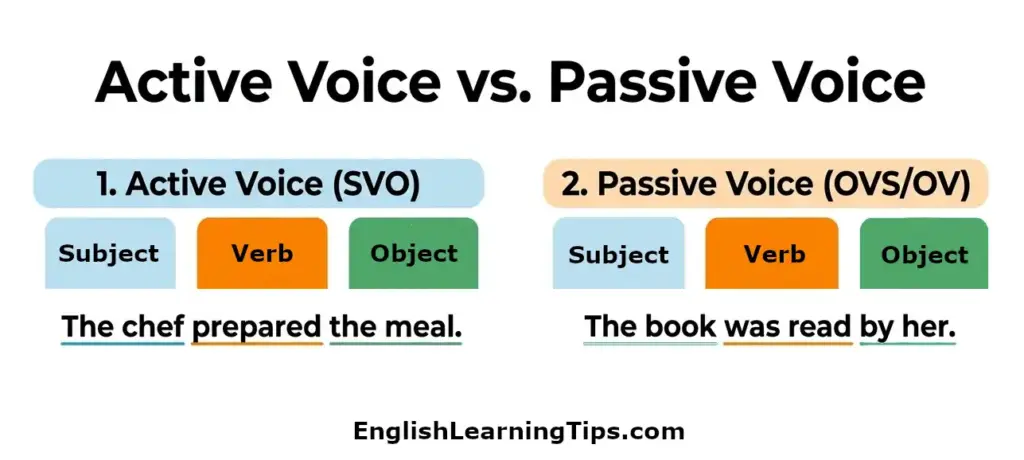
- Eliminate passive voice: Passive voice often flips the order to Object-Verb-Subject (e.g., “The meal was prepared by the chef”). This is wordier and less direct. Using active SVO keeps your word count lean and your message punchy.
- Strengthen calls to action (CTAs): Direct SVO sentences like “Download the guide” or “Get your quote” are far more persuasive than passive alternatives like “The guide can be downloaded by you.”
- Improve accessibility: Simple sentence structures are easier for non-native speakers and screen readers to interpret, making your content more inclusive.
Frequently asked questions about SVO and sentence word order
Video: Identifying subject, verb, and object in a Sentence
Key takeaways for better writing
- Stick to SVO for instructional content to ensure maximum clarity.
- Identify your subject early to help readers and search engines understand your context immediately.
- Use active verbs to keep your sentences engaging and reduce unnecessary fluff.
Conclusion: Master the SVO structure for better writing
Understanding the subject-verb-object pattern is more than a grammar lesson—it is a tool for clearer communication. By keeping your sentences rooted in the SVO structure, you reduce the effort your readers (and search engines) must spend to find your meaning. Whether you are writing a technical manual or a personal blog, the active voice provided by SVO ensures your message remains direct, punchy, and professional.
Join the conversation: How do you structure your sentences?
We want to hear from you! Do you find it difficult to avoid the passive voice in your own writing, or does the SVO pattern come naturally to you?
If you speak a second language like Japanese (SOV) or Arabic (VSO), how does that shift your perspective on English sentence flow? Leave a comment below with your thoughts or a “tricky” sentence you’re trying to rewrite.
If you found this guide helpful for your grammar or writing journey, please share this article with a fellow writer or student!
Discover more from English Learning Tips
Subscribe to get the latest posts sent to your email.


