

How to use “let’s” in English: A complete grammar guide

Using “let’s” is one of the most effective ways to make friendly suggestions or invitations in English. While it seems simple, many learners struggle with the distinction between “let’s” vs. “lets” or where to place the negative. This guide covers everything you need to know to sound natural in both spoken and written English.
What is the meaning of “let’s”?
The word “let’s” is a contraction of “let us.” The apostrophe replaces the “u” in “us.” In modern English, it functions as an inclusive imperative, meaning it is a way to propose an action that the speaker and the listener perform together.
In daily conversation, native speakers almost always use the contraction. The full form, “let us,” is typically reserved for formal speeches, religious contexts, or when specifically asking for permission.
How to use “let’s” in a sentence
The grammatical structure for “let’s” is very consistent. You should always follow this formula:
Let’s + base form of the verb (the infinitive without “to”)
Examples of common uses:
- Let’s meet at the café after work.
- Let’s try that new Italian restaurant downtown.
- Let’s finish this project before the 5:00 p.m. deadline.
Practice makes perfect
Mastering contractions like “let’s” requires repetition. Many learners find that writing out sentences by hand helps with retention. I personally recommend using the English Grammar in Use by Raymond Murphy—it’s widely considered the best self-study book for intermediate learners.
If you prefer a more interactive way to practice, a Small desktop dry-erase board is perfect for jotting down daily “let’s” goals or reminders.
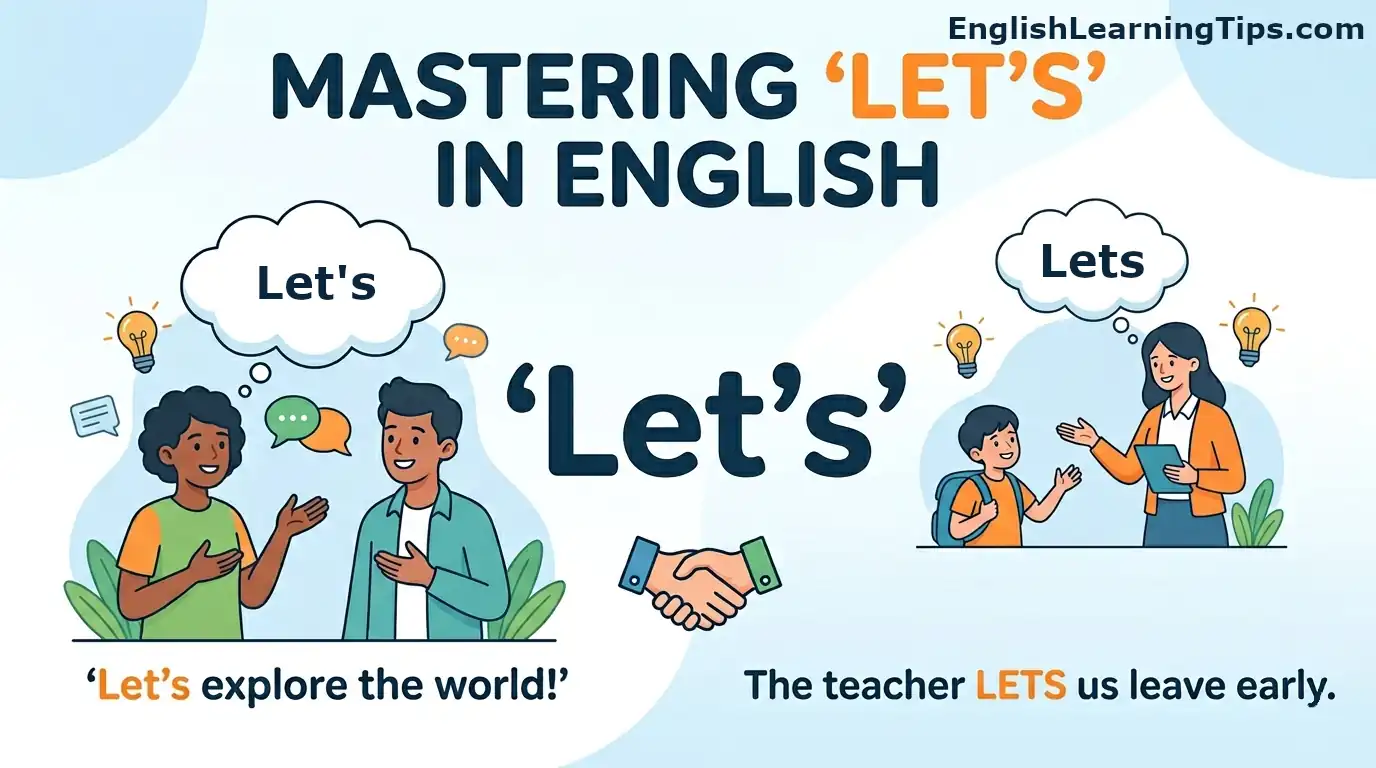
Let’s vs. lets: What is the difference?
A common spelling mistake in English grammar is confusing “let’s” with “lets.” While they sound the same, they serve completely different functions.
| Word | Grammar function | Example sentence |
| Let’s | Contraction of “let us” (a suggestion) | Let’s take a 10-minute break. |
| Lets | Third-person singular of “let” (to allow) | My boss lets us work from home on Fridays. |
The “let us” test: If you are unsure which to use, try replacing the word with “let us.” If the sentence still makes sense, use the apostrophe (let’s). If it sounds wrong, you likely need the verb (lets).
How to form the negative: “Let’s not”
To suggest avoiding an action, use the phrase “let’s not” followed by the base verb. While you may occasionally see “don’t let’s” in older British literature, “let’s not” is the standard for modern writing and natural communication.
- Let’s not argue about small details.
- Let’s not waste time on social media today.
- Let’s not forget to pack umbrellas for the trip.
When to use the full “let us” instead of the contraction
While “let’s” is the go-to for suggestions, the uncontracted “let us” is required in specific scenarios:
- Formal settings: Speeches or formal writing (e.g., “Let us remember those who served”).
- Requesting permission: When “us” refers to a group asking a third party for something (e.g., “Please let us into the building”).
- Emphasis: To sound more serious or poetic.
Common mistakes to avoid
To ensure your writing is professional and grammatically correct, watch out for these frequent errors:
- Adding “to” after the verb: Never say “let’s to go.” The correct form is always “let’s go.”
- Missing the apostrophe: Writing “lets go” is a spelling error when you mean “let us go.”
- Confusing permission with suggestions: Remember that “let’s” always includes you. If you are talking about someone else allowing an action, use “lets.”
Frequently asked questions about “let’s”
Conclusion: Master your English suggestions with “let’s”
Understanding the difference between “let’s” vs. “lets” is a small change that makes a massive impact on your writing and speaking confidence. Whether you are making casual plans with friends or sending a quick update to a colleague, using the inclusive “let’s” (let us) helps you sound natural, collaborative, and fluent.
Remember this rule: If you can replace the word with “let us” and the sentence still makes sense, you need the apostrophe. If you are talking about someone giving permission, skip the apostrophe and use “lets.”
What do you think?
We want to hear from you! Grammar can be tricky, and even native speakers mix these up from time to time.
- Did this guide help clear up the “let’s” vs. “lets” confusion for you?
- Are there other English contractions that trip you up?
- Do you have a “grammar hack” you use to remember the difference?
Leave a comment below and let us know your thoughts. If you found this guide helpful, share it with a friend or a fellow English learner—let’s help everyone master English grammar together!
Discover more from English Learning Tips
Subscribe to get the latest posts sent to your email.


