

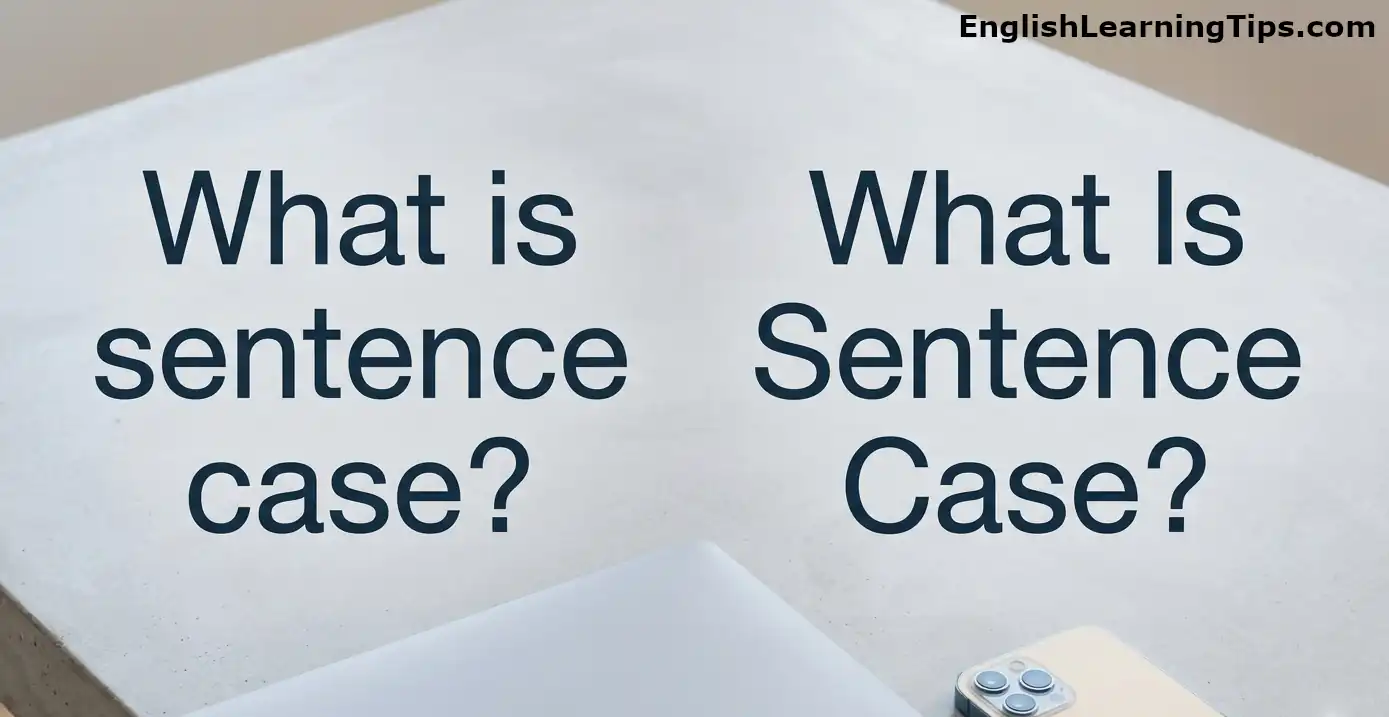
What are sentence case and title case? A complete guide to capitalization

In the world of digital publishing, capitalization is more than just a grammar rule—it’s a design choice. The two most common styles are sentence case and title case. While they both serve the same basic function of organizing information, they impact readability, accessibility, and SEO in very different ways.
What is title case?
Title case, also known as headline style, is a capitalization method where the first and last words, as well as all principal words (nouns, pronouns, verbs, adjectives, and adverbs), are capitalized.
Essential rules for title case
Unlike sentence case, title case requires a bit more mental effort to get right. Standard rules (following styles like Chicago or MLA) include:
- Capitalize major words: This includes all nouns, verbs (even short ones like “is” or “are”), and adjectives.
- Lowercase minor words: Keep articles (a, an, the), coordinating conjunctions (and, but, for), and short prepositions (usually fewer than four letters) in lowercase.
- The first and last rule: Always capitalize the first and last words of a title, regardless of their part of speech.
- Consistency is key: Because title case has more “moving parts,” it is much easier to make mistakes, making a consistent style guide vital for your brand.
What is sentence case?
Sentence case is a capitalization style that mimics the standard structure of a written sentence. In this format, you only capitalize the first word of the heading or title and any proper nouns or acronyms. It is the “default” setting for natural human communication.
While title case was the standard for 20th-century print media, sentence case has become the dominant style for digital-first companies like Google, Apple, and Airbnb.
Essential rules for sentence case
Mastering sentence case is generally simpler than title case, but it requires a keen eye for grammar to remain professional:
- The first word rule: Always capitalize the very first word of your title, heading, or list item.
- The colon rule: Capitalize the first word following a colon (e.g., Grammar guide: Mastering sentence case).
- Proper nouns: Always capitalize names of people, specific brands, cities, and languages (e.g., Microsoft, Paris, Spanish).
- Acronyms and abbreviations: Keep acronyms in their standard uppercase format (e.g., SEO, HTML, UI).
- Lowercase everything else: Unlike title case, you do not capitalize verbs, nouns, or adjectives unless they are at the start of the line.
Sentence case vs. title case: Which should you choose?
While both styles are grammatically correct, they serve different purposes in professional and academic writing.
| Feature | Sentence case | Title case |
| Primary rule | Capitalize the first word and proper nouns only. | Capitalize all major words (nouns, verbs, adjectives). |
| Visual impact | Clean, modern, and easy to scan. | Formal, traditional, and authoritative. |
| Best for | Blogs, news headlines, and APA references. | Book titles, formal essays, and MLA style. |
| Accessibility | High; easier for screen readers and dyslexic users. | Moderate; excessive capitals can disrupt reading flow. |
Why sentence case is better for SEO and readability
Google prioritizes user experience (UX). Sentence case helps your content rank by improving several key “on-page” signals:
1. Better readability for mobile users
On smaller screens, a wall of capital letters can feel cluttered. Sentence case provides a “rest” for the eyes, making it easier for users to scroll and find the information they need quickly.
2. Alignment with search intent
Most users do not type in title case when they search. If your heading is How to use sentence case in Word, it perfectly matches the way a human enters a query into a search engine.
3. Featured snippet opportunities
Google’s AI often pulls “featured snippets” directly from headings. Clear, conversational headings in sentence case are often preferred for these top-of-the-page positions because they look like direct answers to a user’s question.
Pro-tip: Use sentence case in your meta descriptions too. It makes the snippet in Google search results look like a natural answer, which can improve your click-through rate.
Common mistakes to avoid when using sentence case
- Forgetting proper nouns: Don’t get so caught up in lowercasing that you forget to capitalize London or Microsoft.
- Inconsistency: Mixing sentence case and title case within the same set of subheadings can confuse readers and search engines.
- Neglecting the colon: In many digital style guides, the word after a colon must be capitalized. Ignoring this makes the text look unedited.
- Over-capitalizing common nouns: Don’t capitalize words like “Internet” or “Social Media” unless they start a sentence. In sentence case, these are usually lowercase.
Frequently asked questions about sentence case
Final thoughts: Why sentence case is the future of digital writing
Choosing sentence case is more than just a grammatical preference; adopting it is a practical way to boost SEO, accessibility, and user experience. By simplifying your headers, you reduce cognitive load for your readers and align your content with the natural language patterns that search engines prioritize. Whether you’re writing a quick blog or a complex manual, sentence case keeps the focus on your message, not the punctuation.
The real benefit comes from consistency. Once you commit to sentence case, audit your existing content to ensure your brand voice remains professional and polished across every page. And of course, always check with your organization for their preference. They also may not be aware of the advantages of using sentence case.
Join the conversation
We want to hear from you! Are you a die-hard fan of the traditional title case, or have you made the switch to sentence case for your latest projects?
- Leave a comment below: Tell us which style you prefer and if you have noticed a difference in your engagement or search rankings.
- Share this guide: If you found these tips helpful, share this article with your team or on LinkedIn to help others streamline their writing process.
Let’s build a more readable web together.
Discover more from English Learning Tips
Subscribe to get the latest posts sent to your email.


