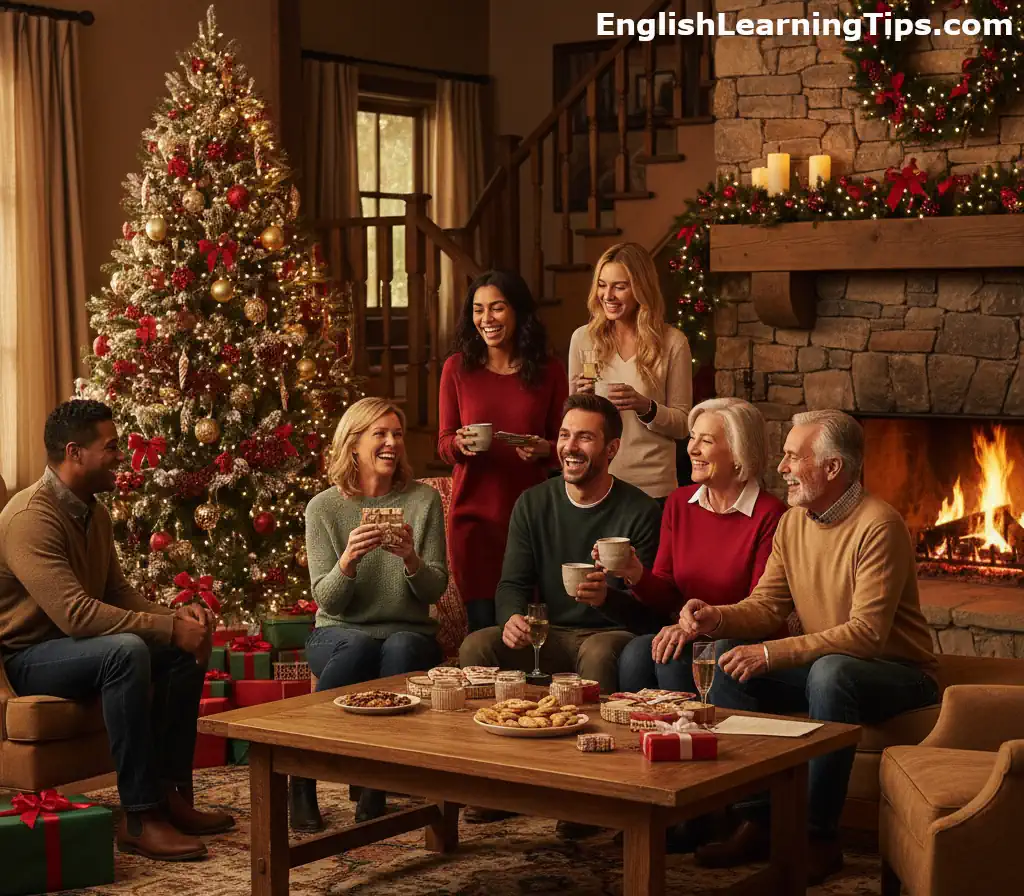
An illustrated guide for an English holiday idioms quiz featuring seasonal decorations and a student holding an English fluency book.
Test your knowledge of festive expressions with our interactive holiday idioms quiz.
|

Quiz: Test your knowledge of festive holiday idioms in English

Hey there! Quick note: As an Amazon Associate, I earn from qualifying purchases through affiliate links in this post—at no extra cost to you. Your support helps fuel my passion for sharing great content—thanks a bunch!

Ready to see how well you know your seasonal expressions? From decorating the house to celebrating the New Year, idioms bring the spirit of the holidays to life in conversation. Take this interactive quiz to test your fluency and master the cultural nuances of the winter season!

Interactive idiom quiz

This quiz is based on our guide, Festive holiday idioms in English to brighten your season. Test your knowledge of common English expressions and see how you rank.

Holiday idioms proficiency quiz

1. What does it mean to “deck the halls”?

  • To clean the floor
  • To decorate for the holidays
  • To host a large party

2. If someone says “the more the merrier,” what are they encouraging?

  • More decorations
  • More food
  • More guests/people

3. Fill in the blank: “Don’t judge that tiny gift; good things come in small _______.”

4. Complete the phrase: “______ the season to be jolly.”

5. If you receive a surprise gift in November, you might say “_______ came early!”

Match the idiom to its context (6-8):

6. Ring in the New Year:
7. Feel stuffed:
8. Snowed in:

9. What famous literary character popularized “Bah humbug”?

  • Tiny Tim
  • Ebenezer Scrooge
  • The Grinch

10. Being “in the holiday spirit” means you are:

  • Tired of the cold
  • Feeling joyful and festive
  • Late for a party

What’s your score?

Use this section to check your work. If you missed a few, head back to the main article to review the definitions and examples!

  1. To decorate for the holidays
  2. More guests/people
  3. Packages (Good things come in small packages)
  4. Tis or ‘Tis (‘Tis the season to be jolly)
  5. Christmas (Christmas came early!)
  6. Celebrate Dec 31st
  7. Ate a large meal
  8. Stuck at home by blizzard
  9. Ebenezer Scrooge
  10. Feeling joyful and festive
ScoreStatusAction
0–4BeginnerTime to brush up on the basics!
5–8IntermediateYou’ve got a great handle on common phrases.
9–10Native levelYou passed with flying colors!

Join the conversation: Share your favorite holiday phrase

Did we miss a classic holiday expression? Or perhaps you have a funny story about using one of these idioms in a real-life conversation? We would love to hear from you.

How you can participate:

  • Share the joy: If you found this guide helpful, share it with a friend who is currently learning English.
  • Stay updated: Follow us for more tips on mastering seasonal English and improving your fluency all year round.

Your feedback helps us create better content for learners everywhere. Happy holidays!

Bonus quiz: Pro-level holiday idioms

Pro-level holiday idioms quiz

1. If a person “quits cold turkey” on New Year’s Day, they are:

  • Eating leftover holiday food
  • Stopping a habit immediately and completely
  • Moving to a colder climate

2. When someone’s face is “lit up like a Christmas tree,” they are showing:

  • Extreme happiness or excitement
  • Confusion about a gift
  • Anger at a holiday party

3. Fill in the blank: “I have so much work to finish; I am completely _______ under.”

4. Which idiom describes grumpy behavior toward holiday festivities?

  • Ring in the New Year
  • Bah humbug
  • Deck the halls

5. “Season’s greetings” is often used as a _______ alternative to “Merry Christmas.”

  • Religious
  • Formal
  • Inclusive

6. True or False: The idiom “break the ice” is only used during the winter months.

  • True
  • False

7. “Christmas came early” is most appropriate when:

  • It snows in October
  • You receive an unexpected benefit or piece of good news
  • You finish your shopping on time

8. Fill in the blank: “We are hosting a small party to _______ in the New Year.”

9. If you are “snowed in,” you are unable to leave your house due to:

  • A broken car
  • Heavy snowfall or road conditions
  • A guest who won’t leave

10. The idiom “the more the merrier” shows _______ when someone asks to bring a friend.

  • Generosity and hospitality
  • Frustration
  • Strictness

  1. Stopping a habit immediately and completely
  2. Extreme happiness or excitement
  3. Snowed (To be “snowed under” means to be overwhelmed with work)
  4. Bah humbug
  5. Inclusive
  6. False (It is a winter-themed idiom but can be used year-round to mean starting a conversation)
  7. You receive an unexpected benefit or piece of good news
  8. Ring (To “ring in the New Year”)
  9. Heavy snowfall or poor road conditions
  10. Generosity and hospitality

Discover more from English Learning Tips

Subscribe to get the latest posts sent to your email.
