

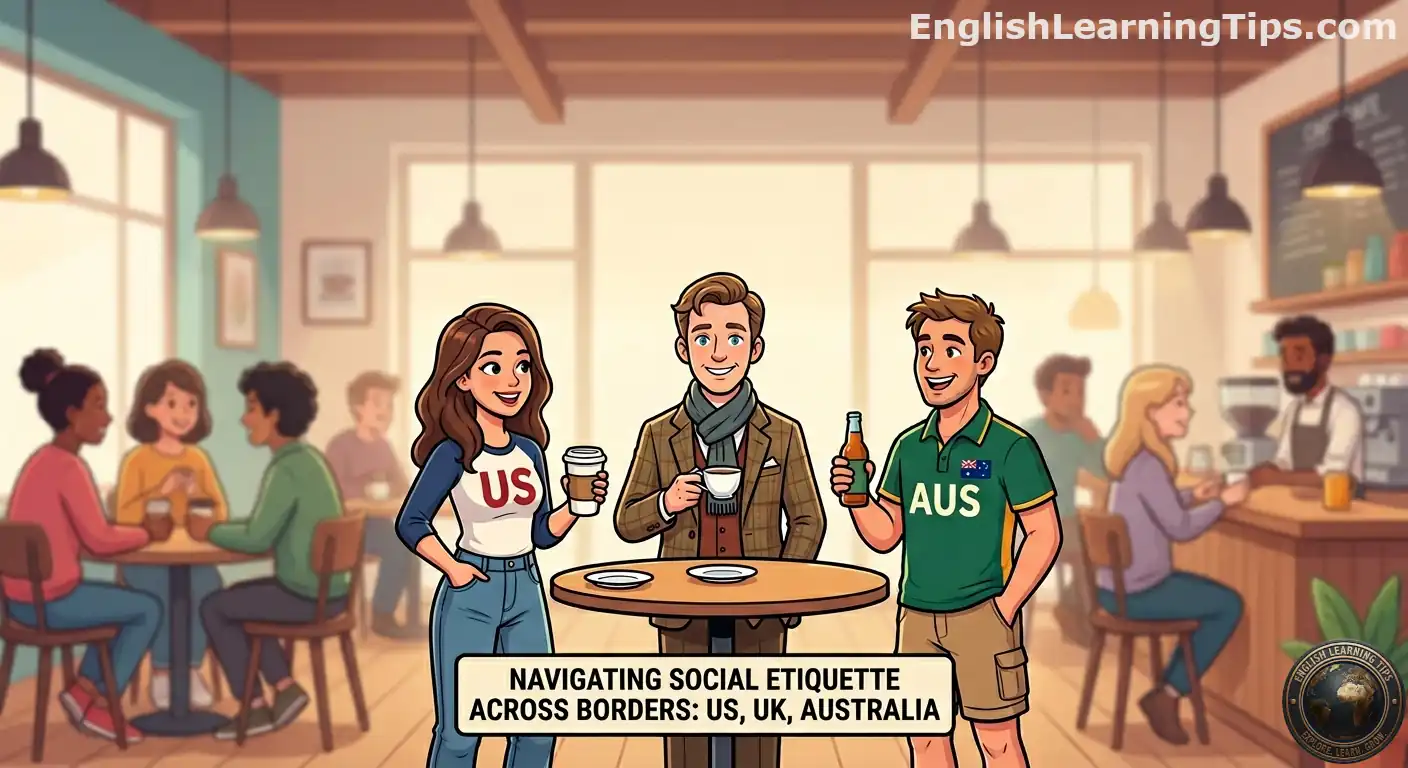
Small talk taboos: Navigating social etiquette in the US, UK, and Australia

Small talk helps people connect in everyday situations like parties, meetings, or casual encounters. Yet, what counts as harmless chit-chat in one English-speaking country can quickly become awkward or offensive in another. Understanding these cultural differences prevents misunderstandings when traveling, working with international teams, or meeting people from different backgrounds. If you are just starting out, learning how to master small talk in English is the first step toward fluency.
This guide breaks down common small talk pitfalls and safe topics across the United States, United Kingdom, and Australia, highlighting how conversational norms vary even among countries that share the same language.
Why small talk rules differ across the US, UK, and Australia
Americans often view small talk as a friendly way to build quick rapport. Brits tend to use it more reservedly, often as a neutral buffer. Australians blend friendliness with directness and a laid-back style that frequently includes humor or mild swearing in relaxed settings.
These differences stem from broader cultural attitudes: the US emphasizes optimism and openness, the UK values privacy and understatement, and Australia prioritizes equality and authenticity. Misjudging these can make someone seem overly familiar, standoffish, or rude.
Small talk taboos in the United States
In the US, small talk is common with strangers in stores, elevators, or at events. People generally expect light, positive exchanges.
Topics to avoid in American small talk:
- Personal finances: Asking about salary or the cost of someone’s home.
- Politics: Hot-button issues like elections or social movements.
- Religion: Deeply personal beliefs are usually off-limits.
- Physical appearance: Comments on weight, age, or “looking tired.”
Asking “What do you do?” (referring to an occupation) is a standard icebreaker. Chatting about the weather, sports, or weekend plans is always a safe bet. Stick to positive “how are you” exchanges, where the expected answer is a brief “good, thanks.” To bridge the gap, using local colloquialisms in American English can also help you build that quick rapport Americans value.
Small talk taboos in the United Kingdom
British small talk often feels more reserved. People may seem polite but distant at first. The weather serves as the classic safe opener because it is neutral and constantly changing.
Topics to avoid in British small talk:
- Money: Discussing earnings or wealth is often seen as “crass.”
- Over-enthusiasm: Excessive American-style cheerfulness may come across as insincere.
- Intrusive questions: Asking “What do you do for a living?” too early can feel like you are social climbing or being nosy.
- Complaining: While Brits love a shared moan about the weather or trains, deep personal venting is a faux pas.
Brits often use understatement and self-deprecating humor. Jumping straight into business or overly personal topics can seem abrupt. To sound more natural, familiarize yourself with common colloquialisms in British English before your visit
Small talk taboos in Australia
Australians are generally friendly and approachable, even with strangers. Their style leans casual and egalitarian, with a love for banter and dry humor. Small talk often happens before diving into business or deeper topics.
Topics to avoid in Australian small talk:
- Bragging: Known as “Tall Poppy Syndrome,” Australians tend to dislike people who boast about their wealth or status.
- Indigenous issues: Sensitive colonial history or political topics regarding Indigenous Australians should be handled with extreme care and context.
- Excessive formality: Being too “stuffy” or formal can make you seem pretentious or untrustworthy.
- Heavy negativity: While casual and direct, Aussies prefer a “no worries” attitude.
People appreciate directness mixed with humor. Swearing sometimes appears in casual settings as a sign of “mateship” or friendliness, though context is vital.
Comparison of small talk etiquette: US vs UK vs Australia
| Feature | United States | United Kingdom | Australia |
| Primary goal | Build rapport & optimism | Polite buffer & privacy | Establishing equality & humor |
| Common greeting | “How are you?” | “Alright?” or weather talk | “How ya going?” or “G’day” |
| Safest topics | Sports, weather, career | Weather, holidays, traffic | Sports, travel, local food |
| Major taboo | Religion & politics | Salary & over-sharing | Bragging & stuffiness |
| Humor style | Sincere & positive | Understated & dry | Sarcastic & self-deprecating |
While the taboos differ, the vocabulary does too. Check out our key differences in British English vs American English to see the key differences in action.
Safe small talk strategies that work everywhere
Regardless of whether you are in New York, London, or Sydney, these universal tips will help you navigate social etiquette. Norms vary even among countries that share the same language and fall into similar cultural clusters.
- Stick to shared experiences: Comments on the immediate environment, local events, or traffic are universally safe.
- Follow the “mirroring” rule: Observe the other person’s energy. If they give short answers, keep it light. If they open up, you can follow suit.
- Active listening: Showing genuine (even if light) interest is more important than having the perfect anecdote. You can also try the echoing technique to build rapport without feeling pressured to come up with new topics.
- The exit strategy: Always have a polite way to end the conversation. Phrases like “It was great catching up, I’ll let you get back to it” work in all three cultures.
Mirror the other person’s energy and depth. For more ideas, try these low-stakes conversation starters for 2026.
Frequently asked questions about English-speaking small talk
Conclusion: Mastering the art of cultural nuance
Navigating the subtle “no-go” zones of conversation in the US, UK, and Australia is about more than just avoiding awkwardness; it is about building genuine trust. While these cultures share a language, their social currencies differ—from the American focus on positivity to the British value of privacy and the Australian emphasis on egalitarianism.
By staying mindful of these taboos and focusing on shared, neutral experiences, you can turn a potentially stiff encounter into a meaningful connection. Whether you are prepping for an international business trip or simply chatting with a new neighbor, the best strategy is to lead with curiosity, mirror the local energy, and when in doubt, keep it light. Once the chat is over, knowing how to end a conversation politely ensures you leave a lasting positive impression.
Share the knowledge: Help others avoid social blunders
Found this guide helpful for your next trip or international meeting? Social signals are a key part of how helpful content reaches more people. If you learned something new about Tall Poppy Syndrome or the “How are you?” paradox, share this article with your network or on Reddit to help others navigate these cultural waters.
What is the most surprising small talk taboo you have encountered? Leave a comment below and let’s keep the conversation going!
Discover more from English Learning Tips
Subscribe to get the latest posts sent to your email.


