
Plant idioms in English: A guide for ESL learners

English is a vibrant language, often pulling inspiration from the natural world. If you want to sound more like a native speaker, mastering plant idioms is a fantastic place to start. These expressions use words like seeds, roots, and flowers to describe life transitions, problems, and personal growth.
Whether you are looking to improve your English vocabulary or understand daily conversations better, these nature-based metaphors will help you express complex ideas simply.
Why use plant idioms?
Idioms can be tricky for intermediate learners because the literal meaning of the words (like “barking” or “bushes”) doesn’t match the actual message. However, using them correctly shows a high level of fluency.
For example, instead of saying “they moved to a city to live there permanently,” you can say they put down roots. It sounds more poetic and natural.
Common plant idioms and their meanings
Use this table to quickly review how these expressions function in daily English.
| Idiom | Meaning | Example sentence |
| Nip it in the bud | Stop a problem before it gets worse | We need to nip this argument in the bud before it ruins the party. |
| Turn over a new leaf | Start fresh or change for the better | After the new year, he decided to turn over a new leaf and exercise. |
| Bark up the wrong tree | Follow the wrong idea or person | If you think I took your keys, you’re barking up the wrong tree. |
| Go to seed | To become neglected or run-down | The neighborhood has gone to seed since the factory closed. |
| Green thumb | A natural talent for gardening | My mom has a green thumb; her garden is full of roses. |
Idioms for growth and new beginnings
These expressions are perfect for talking about life changes, education, or career moves.
- Put down roots: To settle in a place and build a stable life.
- Example: After traveling for years, they finally put down roots in Seattle.
- Plant a seed: To introduce an idea that might grow later.
- Example: The documentary planted a seed in my mind about becoming a vet.
- Reap what you sow: You get the results (good or bad) of your own actions.
- Example: If you don’t study now, you’ll reap what you sow when exam results come out.
- Sow the seeds of (something): To start a process that will develop later, often used for ideas, doubt, or conflict.
- Example: He sowed the seed of doubt in their hearts, so now they don’t believe us.
- Blossom into: To develop successfully or beautifully.
- Example: She started as an intern but has blossomed into a top manager.
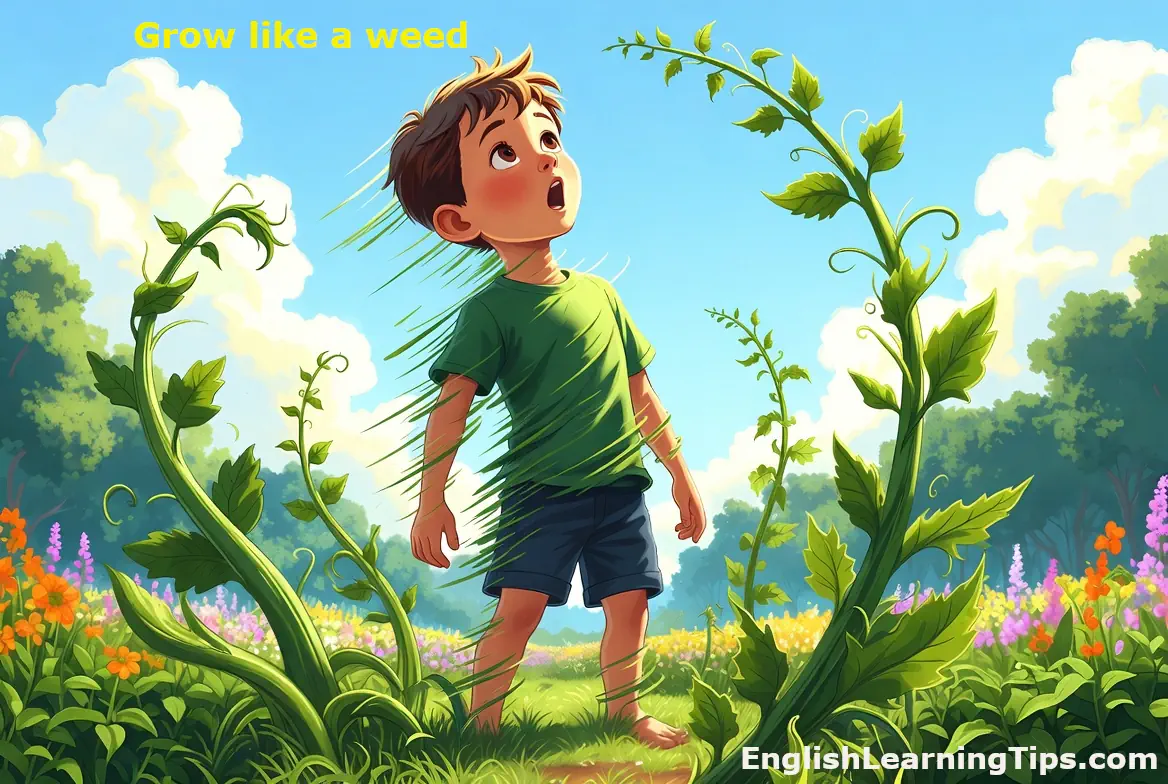
- Grow like a weed: To increase in size very quickly.
- Example: Your son is growing like a weed! He is so tall now.
Idioms for communication and perspective
Sometimes, we use nature to describe how we think or talk to others.
- Beat around the bush: To avoid saying something directly.
- Pro-tip: Use this when someone is taking too long to get to the point.
- Example: Stop beating around the bush and tell me if you’re quitting.
- Can’t see the forest for the trees: To be so focused on small details that you miss the big picture.
- Example: He is so worried about the font size that he can’t see the forest for the trees regarding the actual report.
- Lead someone up the garden path: To deceive or trick someone.
- Example: The company led us up the garden path about the Christmas bonuses.
Frequently asked questions about English idioms
Practice exercise: Test your knowledge
Choose the best idiom to complete these sentences:
- My brother is excellent with orchids. He definitely has a __________.
- I want to start a new life and __________ in a quiet village.
- I tried to tell her the truth, but I kept __________.
- If you don’t study for the exam, your plans for summer might __________.
(Answers: 1. green thumb, 2. put down roots, 3. beating around the bush, 4. go to seed)
Conclusion: Why plant idioms matter for fluency
Learning plant idioms in English is about more than just memorizing vocabulary; it is about understanding the cultural roots of the language. When you use expressions like turn over a new leaf or nip it in the bud, you demonstrate a deeper grasp of English nuance.
As you continue your journey from an intermediate to an advanced learner, try to notice these phrases in movies, books, and daily conversations. The more you use them, the more natural your English will sound.
Share the growth: Join the conversation
Did any of these plant idioms surprise you? Or is there a specific expression in your native language that uses nature to describe life? We would love to hear from you!
- Leave a comment: Tell us which idiom is your favorite or share a “plant-based” expression from your own culture.
- Share this guide: If you found this article helpful, share it with your fellow students or on social media. Helping others grow their vocabulary is the best way to master a language!
- Stay updated: Bookmark this page for a quick reference the next time you are writing an essay or preparing for an English exam.
Discover more from English Learning Tips
Subscribe to get the latest posts sent to your email.


