

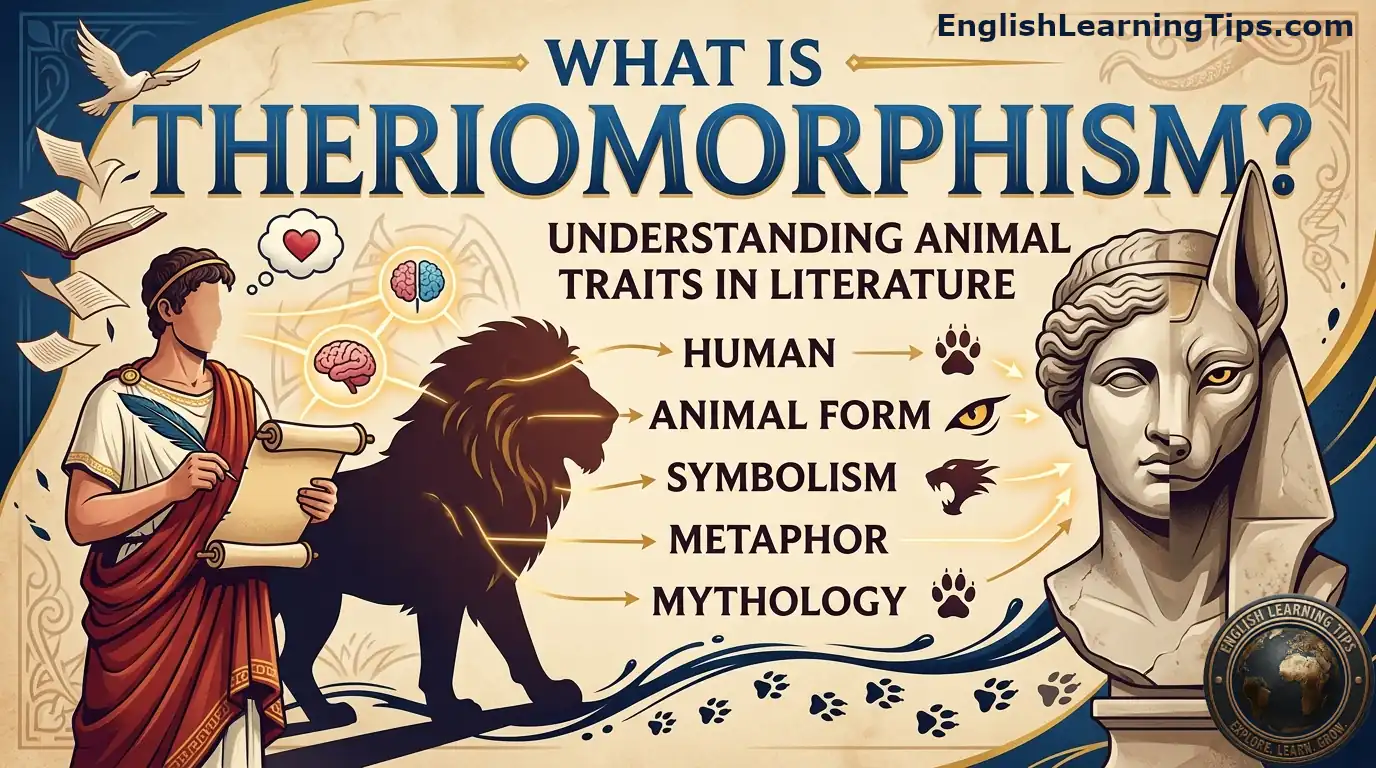
What is theriomorphism in English grammar and writing?

Theriomorphism refers to the attribution of animal forms, features, or characteristics to humans, gods, objects, or abstract concepts. Derived from the Greek roots thērion (wild beast) and morphē (form or shape), this literary device allows writers to create vivid imagery, convey complex ideas, and add symbolic depth to their prose.
In the context of English grammar and writing, authors use theriomorphism to describe human behavior through the lens of animal traits. For example, describing a character as having “wolfish” cunning or being “lion-hearted” immediately communicates personality without lengthy explanation. While it is a common tool in mythology and poetry, modern fiction and everyday descriptive language also rely on theriomorphic expressions to enhance emotional impact and originality.
Theriomorphism definition and origins
At its core, the definition of theriomorphism is the act of shaping something in the form of an animal or ascribing animalistic qualities to a non-animal entity. Depending on the field of study, the application varies:
- In religion and mythology: The representation of deities in animal form.
- In literature and creative writing: Attributing animal traits to humans or inanimate objects to create a specific mood.
- In psychology: Identifying animal-like instincts or behaviors in human subjects.
The concept is rooted in ancient history. Egyptian gods such as Anubis (jackal-headed) and Horus (falcon-headed) are prime examples of theriomorphic depictions. Similarly, Greek mythology frequently features gods assuming animal shapes, such as Zeus transforming into a bull. In literary analysis, recognizing these patterns helps readers uncover deeper layers of symbolism and metaphor.
Theriomorphism vs. anthropomorphism: Key differences
Many writers confuse theriomorphism with anthropomorphism. Understanding the distinction is essential for precise descriptive writing.
| Feature | Theriomorphism | Anthropomorphism |
| Direction of traits | Animal traits given to humans/objects | Human traits given to animals/objects |
| Primary goal | Highlights primal or instinctual qualities | Creates relatability, humor, or empathy |
| Literary example | “He moved with the stealth of a panther” | “The cat sighed and wondered what was for dinner” |
| Common genre | Horror, epic poetry, thrillers | Fables, children’s stories, animation |
| Related terms | Zoomorphism | Personification |
While anthropomorphism softens a non-human character by making it more relatable, theriomorphism often makes a human character feel more raw, powerful, or unpredictable.
How to use theriomorphism in writing
Using animal imagery effectively requires more than just picking a random creature. To improve your English writing skills and other content creation, consider these practical tips:
1. Choose precise animal traits
Match the animal to the specific quality you want to emphasize. A “snake-like” smile suggests deceit and coldness, while an “eagle-eyed” editor implies sharp, focused vision.
2. Use theriomorphic adjectives
In grammar, these expressions often function as adjectives. Enhance your vocabulary by using terms like:
- Feline grace (cat-like)
- Aquiline nose (eagle-like)
- Lupine hunger (wolf-like)
- Bovine patience (cow-like)
3. Combine with metaphor and simile
For better flow, integrate theriomorphism into your sentence structure. For example: “Her anger roared like a wounded bear” uses a simile to ground the theriomorphic trait.
4. Practice moderation
Overusing animal comparisons can lead to clichés. Reserve theriomorphic language for pivotal character moments or to heighten the atmosphere in a scene.
Theriomorphism examples in literature
Classic and modern literature provide a roadmap for how this device enhances storytelling:
- Mythology: Ancient texts use theriomorphism to represent divine power that is beyond human understanding, blending human and beastly forms.
- Poetry: From Shakespeare to Ted Hughes, poets use animal traits to ground abstract emotions in the physical world.
- Fiction: Modern thrillers often use “predatory” descriptions for villains to instill a sense of danger in the reader.
- Nature writing: Essays often blur the lines between human and animal experience, using theriomorphic language to show our connection to the natural world.
Benefits of animal-based imagery in prose
Incorporating theriomorphism into your work offers several advantages:
- Visual impact: It creates immediate mental pictures for the reader.
- Indirect characterization: It allows you to “show, don’t tell” a character’s nature.
- Cultural resonance: It taps into universal archetypes (the wise owl, the brave lion).
- Stylistic flair: It differentiates your prose from literal, flat descriptions.
Frequently asked questions about theriomorphism
Final thoughts: Elevating your prose with animal imagery
Mastering theriomorphism is about more than just comparing a person to a beast; it is about tapping into a deep, primal vocabulary that readers understand instinctively. By integrating animal forms and traits into your English writing, you move beyond literal description and into the realm of powerful symbolism. Whether you are writing a high-fantasy novel or sharpening your descriptive grammar skills, these tools help your work stand out in a crowded digital landscape.
Join the conversation
Which animal traits do you find most effective when describing a character’s personality? Are there any famous examples of theriomorphism in your favorite books that we missed?
Leave a comment below with your thoughts, or share this article with a fellow writer who wants to add more “bite” to their prose. Your insights help our community of writers grow!
Discover more from English Learning Tips
Subscribe to get the latest posts sent to your email.


