
What is symbolism: A complete guide to meaning in English literature

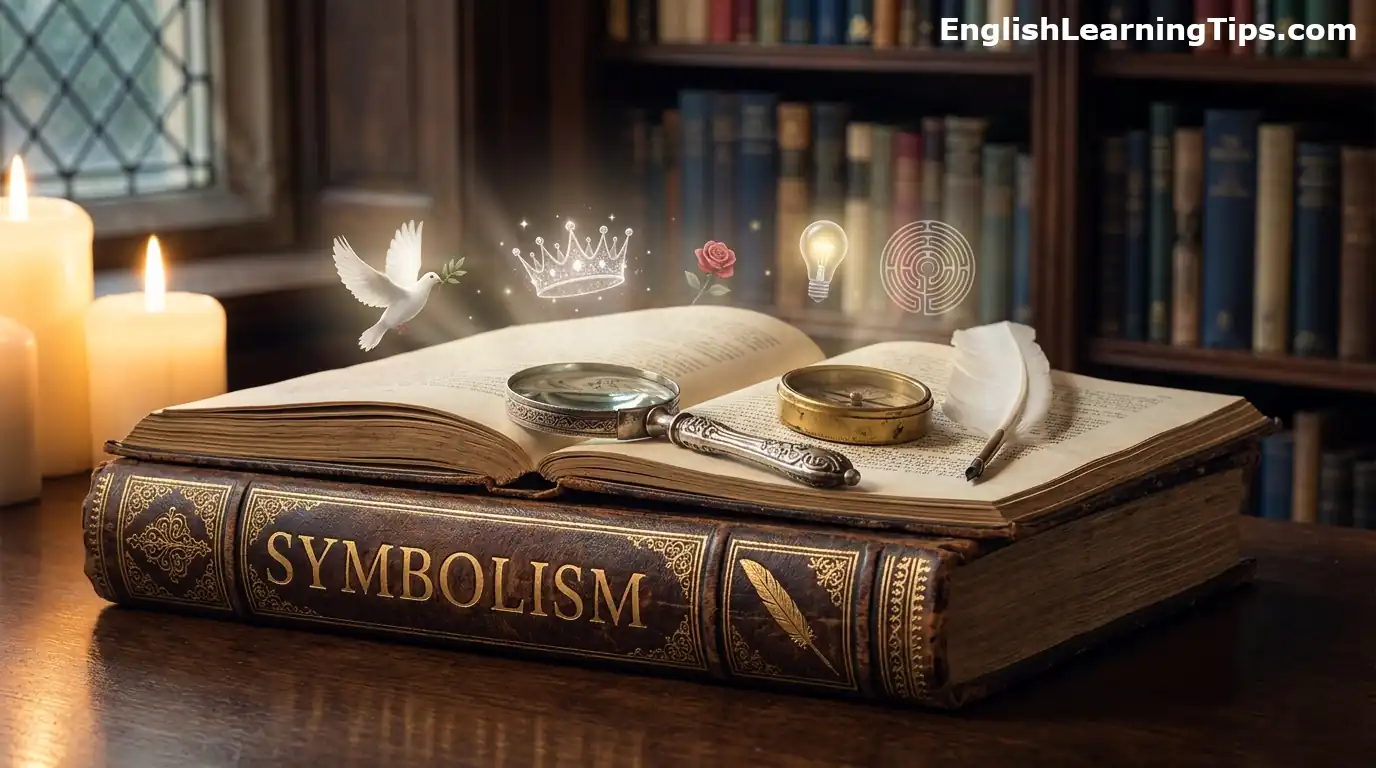
Symbolism is a literary device where an author uses a concrete object, person, place, or action to represent an abstract idea. It allows writers to layer deep meaning into a story without explicitly stating it, turning a simple narrative into a meaningful study of life and emotion.
In the English language, symbolism serves as a bridge between the literal and the figurative. While a physical object remains exactly what it is, it also takes on a secondary, deeper significance that reflects the themes of the work.
Why authors use symbolism
Authors use symbols as a shorthand for complex emotions. Instead of writing several paragraphs about a character’s loss of innocence, a writer might describe a once-vibrant garden withering in the frost. This engages the reader’s intuition and makes the themes of a book more memorable and resonant.
Types of symbolism in literature and writing
- Universal symbolism: These are symbols with widely recognized meanings across cultures. For example, a white dove almost always represents peace, while a red rose typically signals romantic love.
- Contextual symbolism: This type of symbolism is unique to a specific story. An object might be mundane in real life, but the author gives it special meaning through repetition.
- Character symbolism: Sometimes, an entire character represents an idea. This is common in allegories, where figures might stand for “Greed,” “Justice,” or “Purity.”
- Color symbolism: Colors are powerful tools in English writing. Green can imply envy or new growth, while purple often suggests royalty or wisdom.
Common symbols and their meanings in English literature
This table provides a quick reference for frequently used literary symbols and how they are typically applied.
| Symbol | Common abstract meaning | Example context |
| Water | Rebirth, cleansing, or the passage of time | A character crossing a river to start a new life |
| Light | Knowledge, hope, or truth | A lamp flickered on during a moment of realization |
| Winter | Death, stagnation, or old age | A story ending during a harsh blizzard |
| Ladders | Ambition or a connection between worlds | A character climbing to achieve a higher social status |
| Mirror | Self-reflection, vanity, or hidden truths | A character seeing a distorted version of themselves |
Pro-tip: Keep a symbol reference guide on your desk. For a comprehensive look at over 2,000 motifs, I recommend The Complete Dictionary of Symbols. It’s an essential tool for identifying hidden meanings in complex texts.
How to use symbolism in your own writing
If you want to incorporate symbolism into your creative writing or essays, follow these practical steps to ensure your themes land with the reader:
- Identify your core theme: Before picking a symbol, decide what your story is actually about. Is it about betrayal? Growth? Freedom?
- Choose “organic” objects: The best symbols feel natural to the setting. If your story takes place in a desert, a thirsty plant is a more effective symbol than a rainy window.
- Use the “show, don’t tell” rule: Don’t explain the symbol to the reader. Describe the object’s appearance or how the character interacts with it, and let the audience draw their own conclusions.
- Repeat for emphasis: A one-time mention of an object is just imagery. When that object reappears at pivotal moments in the plot, it becomes a symbol.
- Action step: Use a dedicated journal to map out your symbols. Many writers prefer a dot grid notebook like the Leuchtturm1917 to sketch out how symbols evolve throughout their chapters.
Symbolism vs. metaphor: What is the difference?
While they are related, symbolism and metaphor are not identical. A metaphor is a direct comparison (e.g., “The classroom was a zoo”), whereas symbolism is an ongoing representation where an object maintains its literal reality while standing for something else.
Frequently asked questions about symbolism
Elevating your writing through symbolism
Symbolism is more than just a literary trick for English classrooms; it is a fundamental tool for any storyteller looking to add resonance and depth to their work. By mastering the use of concrete objects to represent abstract ideas, you invite your readers to engage with your writing on a much deeper, more personal level. Whether you are writing a short story, a poem, or a persuasive essay, a well-placed symbol can stay with an audience long after they finish reading.
Join the conversation: What are your favorite symbols?
We want to hear from you. Is there a specific symbol in a book or movie that completely changed how you viewed the story? Or perhaps you are struggling to find the right symbolic image for a project you are currently working on?
Leave a comment below with your thoughts or questions. If you found this guide helpful, please share it with a fellow writer or student to help them sharpen their literary analysis skills. For more tips on mastering English writing devices, explore our related guides on metaphors and simile.
Discover more from English Learning Tips
Subscribe to get the latest posts sent to your email.


