
The indicative mood in English grammar and writing

The indicative mood is one of the primary structures in the English language. From professional reports to casual texts, the indicative mood is the workhorse of English grammar.
Understanding how it works—and how it differs from the subjunctive and imperative moods—is essential for clear and professional communication. This guide covers everything you need to know about the indicative mood, including real-world examples, tense breakdowns, and common mistakes to avoid.
The indicative mood in a nutshell:
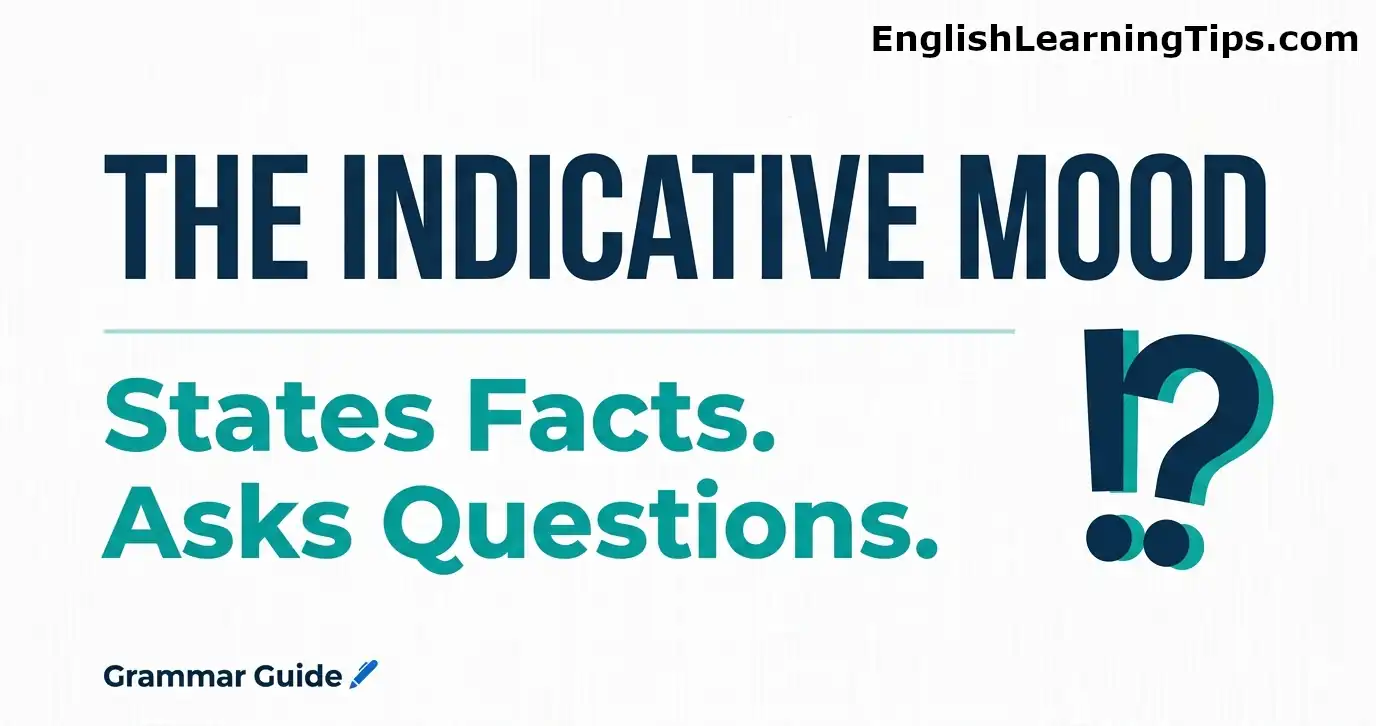
- Purpose: To state facts, opinions, or ask questions.
- Frequency: The most used mood in English.
- Distinction: Unlike the subjunctive (hypotheticals) or imperative (commands), the indicative deals with reality.
What is the indicative mood?
The indicative mood is a category of verb forms used to state facts, express opinions as truth, or ask direct questions about reality. It is one of the three primary grammatical moods in English, alongside the imperative (commands) and the subjunctive (hypotheticals).
Because it deals with things that are “indicated” to be true, it is the default setting for most English sentences. Unlike the subjunctive mood, which often requires specific verb changes, the indicative mood follows standard subject-verb agreement and covers all major time frames—past, present, and future.
Recommended resources for mastering English grammar
If you want a physical reference to keep on your desk, The Blue Book of Grammar and Punctuation is a fantastic choice. It breaks down complex moods into simple, actionable rules that go beyond the indicative mood.
Indicative mood examples in sentences
To see the indicative mood in action, look at how it handles different types of statements:
- Factual statements: “The earth rotates on its axis.”
- Opinions presented as facts: “That was the most boring movie of the year.”
- Direct questions: “Did you remember to lock the front door?”
- Future predictions: “It will likely rain tomorrow afternoon.”
These examples all share one trait: they describe the world as it is (or as the speaker believes it to be).
Indicative mood across verb tenses
The indicative mood is highly versatile, functioning across every major tense.
How tenses work in the indicative mood
| Tense | Example sentence | Context |
| Simple present | He walks to the park every morning. | Regular habits or general truths. |
| Present continuous | They are eating dinner right now. | Actions happening at this moment. |
| Simple past | The company launched the product in 2024. | A completed action in the past. |
| Past continuous | I was sleeping when the phone rang. | An ongoing past action interrupted by another. |
| Simple future | We will meet at the library at noon. | A planned event or promise. |
| Present perfect | She has lived in London for five years. | An action that started in the past and continues. |
| Past perfect | They had finished the project before the deadline. | An action completed before another past event. |
For those who learn better through visuals, a high-quality English grammar poster set or grammar flashcards can help you keep these tense structures top-of-mind while you write.
Comparing the three grammatical moods: Indicative, subjunctive, and imperative
To truly master the indicative mood, you need to know what it isn’t. Most grammar errors occur when writers accidentally swap these three moods.
1. Indicative vs. subjunctive
While the indicative mood deals with reality, the subjunctive mood deals with “unreality”—wishes, doubts, or hypothetical situations.
- Indicative (Fact): “I was at the party.”
- Subjunctive (Wish): “I wish I were at the party.”
2. Indicative vs. imperative
The imperative mood is used for direct commands or requests. It usually leaves out the subject “you.”
- Indicative (Statement): “You close the window when it’s cold.”
- Imperative (Command): “Close the window!”
How to use the indicative mood effectively in writing
Using the indicative mood effectively is about more than just getting the grammar right; it’s about clarity. Here are a few ways to improve your writing:
- Prioritize the active voice: Indicative sentences are strongest when the subject performs the action. Instead of saying “The report was written by Sarah,” say “Sarah wrote the report.”
- Be direct in business writing: Use the indicative mood for status updates and project goals to ensure there is no ambiguity about what is happening.
- Check for subject-verb agreement: In the indicative mood, always ensure your verb matches your subject, especially in complex sentences with “either/or” or “neither/nor” structures.
Common mistakes to avoid
- Mood shifting: Don’t start a paragraph in the indicative (“You should go to the store”) and abruptly switch to the imperative (“Go now!”) without a clear reason.
- Using “was” for hypotheticals: If you are describing a dream or a “what if” scenario, you are in the subjunctive mood and should often use “were” instead of the indicative “was.”
Build your professional writing toolkit
To move beyond basic grammar and develop a unique writing voice, I recommend these two essentials:
- Dreyer’s English: This book is perfect for learning how to use the indicative mood with flair and authority.
- Merriam-Webster’s Collegiate Dictionary: A reliable dictionary is essential for checking the nuances of verbs and ensuring your factual statements are accurate.
Frequently asked questions about the indicative mood
Master your writing with the indicative mood
The indicative mood is more than just a grammatical category; it is the primary engine of clear communication. By using it correctly, you ensure your facts are solid, your questions are direct, and your opinions are heard clearly. While other verb moods like the subjunctive add nuance, the indicative provides the clarity that readers and search engines alike value most.
Need help writing? Be sure to check out our grammar guides on writing in English.
Help others improve their writing: Share this guide
If this breakdown helped you understand English verb moods better, chances are it will help someone else, too. Share this article with a student, a colleague, or anyone looking to polish their English grammar. Do you have a tricky sentence that you can’t quite categorize? Drop it in the comments below, and let’s figure it out together.
Discover more from English Learning Tips
Subscribe to get the latest posts sent to your email.


